Showing posts with label Dog Training Tips. Show all posts

Sunday, November 19, 2023

Puppy Training - Your Housetraining Shopping List For Beginners

Puppy Training Preparation Checklist For Beginners

Puppy Training - Your Housetraining Shopping List For Beginners" is an essential guide for new pet owners embarking on the journey of housetraining their furry companions. This concise yet comprehensive resource serves as a beacon, offering a curated list of must-have items tailored to simplify the process of training a puppy to adapt to a home environment. With clear and practical suggestions, it empowers beginners to navigate the array of products available, ensuring they are equipped with the right tools and supplies to foster effective housetraining. This guide is a valuable asset, providing a solid foundation for a successful and harmonious relationship between puppies and their owners.Before bringing your puppy home, you’ll need to do some shopping. If you have all the essentials in place before your dog arrives, it will be easier to help her learn the rules from day one.


Exercise Pen: Portable exercise pens are great when you have a young pup or a small dog. These metal or plastic pens are made of rectangular panels that are hinged together. The pens are freestanding, sturdy, foldable, and can be carried like a suitcase. You could set one up in your kitchen as the pup’s daytime corral, and then take it outdoors to contain your pup while you garden or just sit and enjoy the day.


Puddle Pads: If you prefer not to stockpile newspaper, a commercial alternative is puddle pads. These thick paper pads can be purchased under several trade names at pet supply stores. The pads have waterproof backing, so puppy urine doesn’t seep through onto the floor. Their disadvantages are that they will cost you more than newspapers and that they contain plastics that are not biodegradable.


Poop Removal Tool: There are several types of poop removal tools available. Some are designed with a separate pan and rake, and others have the handles hinged like scissors. Some scoops need two hands for operation, while others are designed for one-handed use. Try out the different brands at your pet supply store. Put a handful of pebbles or dog kibble on the floor and then pick them up with each type of scoop to determine which works best for you.


Plastic Bags: When you take your dog outside your yard, you must pick up after her. Dog waste is unsightly, smelly, and can harbor disease. In many cities and towns, the law mandates dog owners clean up pet waste deposited on public ground. Picking up after your dog using a plastic bag scoop is simple. Just put your hand inside the bag, like a mitten, and then grab the droppings. Turn the bag inside out, tie the top, and that’s that.


Newspaper: The younger your puppy and larger her breed, the more newspapers you’ll need. Newspaper is absorbent, abundant, cheap, and convenient.


Crate: To housetrain a puppy, you will need some way to confine her when you’re unable to supervise. A dog crate is a secure way to confine your dog for short periods during the day and to use as a comfortable bed at night. Crates come in wire mesh and in plastic. The wire ones are foldable to store flat in a smaller space. The plastic ones are more cozy, draft-free, and quiet, and are approved for airline travel.


Enzymatic Cleaner: All dogs make housetraining mistakes. Accept this and be ready for it by buying an enzymatic cleaner made especially for pet accidents. Dogs like to eliminate where they have done it before, and lingering smells lead them to those spots. Ordinary household cleaners may remove all the odors you can smell, but only an enzymatic cleaner will remove everything your dog can smell.


Baby Gates: Since you shouldn’t crate a dog for more than an hour or two at a time during the day, baby gates are a good way to limit your dog’s freedom in the house. Be sure the baby gates you use are safe. The oldfashioned wooden, expanding lattice type has seriously injured a number of children by collapsing and trapping a leg, arm, or neck. That type of gate can hurt a puppy, too, so use the modern grid type gates instead. You’ll need more than one baby gate if you have several doorways to close off.


For puppy training, preparation is key. Get yourself properly armed with the right set of tools, patience, and a lot of love... you're set to embark on a rewarding journey with your new furry friend. Enjoy every step of this incredible adventure!


Read more...
Buzz this

Thursday, September 26, 2019

Some Very Important Suggestions for Effective Puppy Training


Providing obedience-training is one of the most important parts of sensible dog-raising and it shapes and balances the fine link between the canonical spirit and the human society, making both the aspects acceptable to each other. Sit on command training is a comparatively easy one to handle by both the dog and his owner. Sit on command is often taken as one of the primary steps towards training your dog about obedience, and acts as a base for the dog to develop and learn more advanced forms of obedient training.


Early start is suggested

The training makes your dog look good and admirable near the guests as this prohibits him from jumping on them to greet them. The best time to start sit command training is when your dog is still in his puppy-hood as that is the time when the lessons have a long-term effect on the dog's mind and life. So earlier the better! Therefore it is important for you to build a tight bond and trust with your puppy from the very beginning. A strong owner-dog bonding will help you build trust and confidence in him for you. Eventually he will start treating you as a leader.


Detaching distractions is suggested

To begin with, a small room (adequately airy and clean) should serve your training purpose. A small cozy closed space will help you detach your pup from any sort of distraction.  You can choose any time of the day to start this training. It is important to keep in mind the following factors while teaching your dog sit on command.


Patience and positive attitude is suggested

It is important that your puppy grows fondness, dependency and loyalty towards you, which again depends on how to treat him and how you instill lessons in his mind with positive reinforcement.
    
As an owner you should understand that puppies cannot be expected to stick to one kind of game for a long period of time and hence any training should not be an elongated process. There should be repetition as many number of times as possible with intermediary play and walk breaks one. An elongated session of teaching a particular trick will make the puppy feel confined and tired in the process. Make the process fun-filled with suggested breaks and praises to make the puppy enjoy the training. Patience and positive attitude is very important here.

    
Maintaining consistency in everything related is suggested

Very important... you should be very consistent and yet informal with the training, so that your dog does not take it as a burden and become lethargic. choice of command words must be consistent. If you choose the word "Down" to teach him to lie down, then NEVER use "Lie" or "Lie Down" for the same purpose. Consistency in choice of words and your action is the key to the success story! The most important thing to keep in mind as an owner is to make sure that your dog is understanding what you are asking him to do for you. If he is not understanding, then there's something that you need to fix at your end... there's no problem with the dog.


Helping in associating words with actions is suggested
 
Remember, your dog doesn't know human words! Use of a particular word, for example, 'Sit' will become a command, if and only if you can successfully help your puppy associate your word with the desired action. Dictionary meaning of a word doesn't matter with your dog. What matters is the association of sound of the word with the action you help him to associate with.


Reward based training is effective and suggested

It is important for the owner to help the dog relate action with the sound of a word and then use rewards to practice it. However, Reward based training process are misused by many trainers.

Reward Based Training is not always Positive Reinforcement Training, contrary to the popular belief. A "Reward" is a stimuli that is presented before the dog to initiate teaching good behavior. But a stimuli that stimulates a dog to initiate a bad behavior is thew on set of failure. Because often times, the trainers are not skilled enough to start the implement a Reward based training process. And consequently end up making the stimuli make the dog behave undesirably and then get punished as corrective measures... This entire process is unscientific and illogical.

However, many dog trainers, consider the Reward Based Training methods as unsuitable, because they think a reward is an opportunity for the dog to fail. They, instead, take "Reward" away from their training process and apply other approaches that they think better for the dog, because taking  away the reward is killing the opportunity for the dog's failure. A Positive Reinforcement is the reward based training when the scope doesn't exist for the dog to make mistake and get punished, but only get reward for desirable behavior and the negative behaviors is tactically ignored by the trainer.


Keeping a realistic expectation is suggested

Have realistic expectations from your dog, as he tends to take time to grasp your command and act accordingly. There's not one dog on this planet that cannot be trained. All dogs can be trained; They are Caninesteins! All you need is to have a realistic expectation from your dog. If you have enough Time, Patience, and Scientifically Backed Practical Knowledge then it is surely possible.

You cannot expect from an un-socialized dog to behave calm in front of other animals and strangers. That's not a realistic expectation. Once the dog is socialized you can apply corrective training methods to rectify his behavioral problems with yourself being patient and having positive attitude. This is realistic expectation.


Deter from punishing your puppy for slow or no progress, as dogs hardly has a sense of reason or time and hence tends to get baffled and confused when they are treated badly. This is the best conclusion I have come up with!   


Read more...
Buzz this

Wednesday, August 28, 2019

Top 10 Tips on Leash Training a Puppy


Properly training your puppy is an essential part of being a good dog owner, and leash training is one of the most important goals to reach. Even if your puppy won’t leave your side, and even if they rarely leave your large, fenced-in yard, they must still learn to walk with a collar and leash. When you take your dog to the vet or the park; or if your traditional or underground dog fence is temporarily down; your dog will need to be on a leash for their own safety. Sometimes leash training can be a challenge but as with all training tasks, patience, confidence, and consistency are the keys to success. The following 10 tips will also help you while leash training your puppy.


1. Select the Right Collar and Leash

In order to properly leash train your puppy, you need to begin with the right tools. You should begin with a flat, lightweight collar and a lightweight leash. There are many different types of collars and leashes, and you will may need to purchase new, heavier ones as your puppy grows, especially if they are a large breed like a German Shepherd. However, in the beginning, the collar and leash should be as light as possible so that they are comfortable for your puppy.


2. Let Your Puppy Adjust to the Collar

Wearing a collar is a foreign concept to your puppy, so you must give them time to adjust to it before you begin training. When you fit the collar, make sure it is snug but not too tight, or it will irritate your puppy. At first, put the collar on your puppy when they are occupied with playing or eating, so they have something positive to focus on. This will draw their attention away from the new feel of the collar and help them get used to wearing it.


3. Connect the Leash to Playtime

Once your puppy has had a few different occasions to get used to wearing the collar, add the leash to it. The weight of the leash will also take some getting used to, so connect wearing the leash to positive activities like playing. Let the leash trail on the ground while you throw a ball for your puppy, for example, and they should be adequately distracted by the game of catch. Even if your puppy is contained in your yard by an electric fence for dogs or traditional fence, always supervise them while their leash is on to prevent tangling or accidental strangulation.


4. Start with Short Training Sessions

Always use short training sessions, especially at first, to avoid overwhelming or upsetting your puppy. If you are patient and allow your puppy to progress at their own pace, you’ll have much better results. Slow baby steps will create a solid foundation for walking on a leash, as forcing quick obedience never works well. If you notice your puppy getting tired, stressed, or losing interest, end the leash training session and begin again after at least a few hours of rest.


5. Utilize Treats as Encouragement

Treats are excellent encouragement, and they will help your puppy associate obedience with reward. Begin by offering your dog a treat for simply sitting next to you while you’re holding their leash. Take a few steps forward, then offer your dog another treat if they follow you at your side. Holding a treat at your side will help your dog understand where they are supposed to be. Reward good behavior with a treat; positive reinforcement is excellent for leash training.


6. Remain Calm and Positive

If your dog does not follow you properly, do not get upset or irritated. Keeping a calm, encouraging, and positive demeanor will help your dog succeed. Getting upset will only upset your dog, and it will greatly slow down their progress. Simply repeat your training exercises, and withhold treats if your puppy does not comply as expected. Never lose your temper – and this goes for all training, whether it be electronic dog fence training, house training, or any type.


7. Don’t Pull on the Collar at First

Avoid putting pressure on your puppy’s collar, because this will give them a negative feeling regarding their collar and leash. If your dog does not follow you, or if they walk too far ahead of you, do not jerk their collar or drag them into place. Simply stop, hold the treat where you want them to be, and wait for them to process the situation and realize what you want them to do. Once your puppy is leash trained, you can begin to put small amounts of pressure on the collar to get them accustomed to it, and follow up with a treat as a reward.


8. Decrease Leash Slack If Necessary

If your puppy is having trouble heeling while walking on the leash, decrease the leash slack to keep them closer to you. Again, hold a treat by your side as encouragement, and periodically give them the treat while they walk in place. Gradually increase slack as you go.


9. Be Consistent and Persistent

Another leash training tip that goes for all types of training is to be consistent. Consistency is essential for teaching your puppy proper behavior and obedience; inconsistency of method or expectations will only confuse them. Also be persistent. If your dog is not cooperating or needs a break, try again a few hours later or on the next day, and repeat.


10. Practice and Reward Regularly

Once your dog has learned how to walk on a leash, be sure to practice regularly. If you do not go on walks often, it’s important to put your dog on a leash and walk them around your backyard every so often to reinforce their skills. Continue to reward them with treats for their success, and they’ll retain the knowledge of proper leash walking and heeling.

Read more...
Buzz this

Monday, August 26, 2019

Stop Your Bouncing Ball From Jumping


Stop Dog Jumping

It is not always suggested locking your dog in a room or chaining him whenever you are visited by your friends and guests or when there’s a lizard on the wall. Have you ever wondered why your dog jumps on certain situations? If your dog misbehaves (jumps) on situations like these, it sounds like he is not properly socialized. I have talked loads on socialization earlier, and this is again another time I thought of publishing another post on how to prevent your dog from jumping. However, it’s not just socialization that can help you control jumping mishaps. Understanding why dogs jump is the first step towards controlling jumping mishaps.

Yes… socialization is one major factor obviously; so let’s start off with this. Helping your puppy mingle with strangers, your friends and situations is the best way to prevent many behavioral problems when he becomes adult. Dogs jump because they want to come closer to the object(s) or human(s) that trigger their inquisitiveness.

A consistent and regular practicing to help your dog know the natural things of a social world can mitigate their inquisitiveness. Make it a practice to take your dog out during a time of the day when he can see children playing, vehicles passing by, friends coming your way, birds & butterflies flying around and he can meet other pets on the sidewalk. Start socializing your dog at an early age.

If your dog jumps every time he sees a lizard on the wall or as soon as he finds you picking up his leash, then he has unused energy, and probably needs more exercise. Lack of exercise results in uncontrolled restlessness, including jumping accompanied with lack of focus. Giving your dog right volume of exercise is very important for maintaining a balanced behavior. ‘Right volume of exercise’ doesn’t mean excessive exercise to make him over exhausted. Over exercise is equally harmful as inadequate exercise. Consistent training alongside proper exercise leads to success.

What to train and how?

Remember, a favorable attention acts as a reward to your dog. The moment he turns notorious and jumps, seeing you coming in with his food bowl, immediately take off your attention from him, saying a firm and strong “NO”. By being consistent about this can effectively correct the undesirable jumping behavior. However, it may take time to correct bad behavior – especially like the ones such as jumping and chasing, and you need to be very patient and give your dog adequate time to get corrected.

Another wise idea is to give each undesirable behavior a unique name – say “Leap” for jumping on others, “CHASE” for chasing a running car and so on… The next step should be teaching your dog only to act on command, so that he will Jump only when you say “LEAP”, which means he will not jump until you direct him to jump by deliver the command “LEAP”. This in turn means you can control or rather manipulate some of his actions by giving or not giving command.

Training can only be effective if it’s calm and consistent. Teach your dog to perform any action (jump or sit) on command without forcing him, shoving him, yelling at him and absolutely without any kind of excitable movements or vocalization on your part. Any kind of excitement expressed by you will incite the dog, and will make de-focused further. For every desirable action he performs he should be praised lavishly – which acts as a reward to him. If your dog happens to be an unfocused jumper, it may be a bit more challenging; he needs enough on-leash exercise to sit and stay on commands at the very outset. Teaching him to jump only on command should be an advanced phase of training, followed by an extensive on-leash exercise to teach him sit and stay calm.

Consistency is the key to the success. You need to be consistent with the word you choose for each of the undesirable actions of your dog. You have to be consistent about what you want and what you don’t. You have to be consistent about the word your use as an corrective command – “NO” or “NAY” or “STOP” or “HALT”. Never allow him to jump until you direct him to do so. Immediately remove your attention and move back once his starts jumping seeing you picking up his leash. Most importantly — Do Not Allow Another Dog Lover Stop You From Correcting Your Dog In Middle Of Your Corrective Training Process. Doing So Will Confuse Your Dog And Things Will Only Worsen Up.


What to let him know?

Your dog doesn’t know at what time he’s not allowed to jump. But he can understand at what situation he should not jump. Let him know that putting his collar around his neck means he needs to behave calm. A consistent on-leash training process will make him understand that he should not jump when he is on his leash or when he has the collar around his neck. If your friend visits you and he is not on leash he knows he can jump as he is not disallowed to do so, because he doesn’t have the collar yet. But the moment he is on the leash or collared, he understands that he should not jump.
So whenever someone knocks your door, make sure your put the collar your dog before your open the door. Do so is actually a non-verbal command for your dog asking him not to jump at the incoming guest.

Read more...
Buzz this

Sunday, August 11, 2019

How to Intensify the Bond Between You and Your Dog/Puppy


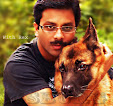
Pranab Deb and German Shepherd Simba, Police Constable, CISF (Central Industrial Security Force) are stationed at Indian Oil Corporation’s site in Haldia, West Bengal.

Human- Dog Relationship

The first day when you bring that bundle of joy home, you are considered to be his only parent. Whether he grows up to a desirable dog or an unruly canine, you are responsible for its upbringing and character development. However, in the quest of training our dog, following several rules, techniques and instructions, we often forget the more important aspect, and that is to build a strong bond between us and our dogs. In almost every cases, a strong bond between you and the dog mitigates a lot of obstacles and blocks during the process of dog training, as it naturally motivates the dog to look up at you for instructions and commands.

The best time to establish a bond between you and your canine companion is when he's still a puppy, as that is the age when he's most responsive, flexible and the tendency to bond with his master or owner is at its peak. Apart from this, the tender age of puppy-hood is the time when he learns most of the tricks and retain those for a longer time. Another very important factor to keep in mind is to choose a breed which would suit your lifestyle and attitude and would be able to cope with the same with his own behavior.

It is not advisable to go by the puppy's look or size, rather it is important that you choose one with whom it would be easier to co-exist and connect for a long term. In certain cases, one can even go and consult a vet before choosing the apt breed that would be compatible with the owner's lifestyle. For a owner, it is advised to retrospect that a little puppy is like a little child, whose life in this age has to be filled with all the positive attributes, in a balanced manner to make him grow up into a healthy, happy, energetic and compassionate companion for a lifetime, and this responsibility of bringing up your puppy into a desirable dog depends upon how strong is your bond with your dog. Let's see what all we can do to fulfill the purpose.

The ideal age in which a puppy should be brought home is when he's 7 weeks old and this will allow you to have a natural bonding with your puppy, as he will connect with you through his senses like smell, taste and voice. Try to spend the maximum time with your puppy, teach him to move, walk and play with you.

Watch it grow and explore life with his natural enthusiasm and curiosity, besides teaching him the various ways of life and correct social disposition. The more time you would spend with your new puppy watching his every moves, acts and deeds, the more he will look up at you for guidance, protection and instructions, and there lies the foundation of obedience and dependence.

Take measures to socialize your puppy from the very beginning by introducing him to the children and other family members, smaller pets (if any), friends, relatives, the neighbors etc. It is important for the puppy to get acquainted with more and more human faces and their sounds, smell, touch, gestures, expressions and activities. This will not only socialize the puppy but will also make him compare your presence and touch with the others and see him coming back to you for comfort and security.

The cutest sight for any puppy-owner is to find his puppy sweetly following him wherever he goes, it's fine, as a puppy feels like a small child who when left alone, fears being abandoned. However, you can do an activity of leaving him for few minutes and coming back to him after that with a treat. Doing this on a regular basis (leaving your puppy for some time and coming back to him with a treat) would grow a feeling and confidence in your puppy, that you would not be away for a long time, and this certainly shall strengthen the bond of trust between you two.

A very important feeling that an owner must inculcate in his puppy to enhance the bond of love and belonging is to make the puppy feel like an integral part in his owner's life and this can be done by making your puppy a part of your daily activities like visiting nearby market to pick household stuffs, carrying him to the school to pick your children up, taking him for a morning or evening walk, teaching him few tricks like fetching things for you and helping you to pick up stuffs during cleaning up the rooms etc. another very important way to make your dog look up at you for comfort and help is when you potty-train him properly.

To build proper potty habits in your growing puppy it is important to be with him at almost all the time when he wakes up in the early mornings or in the mid of the night. Look for indications and signs and observe his body language when he needs to do his business and take him out after every meal (which should preferably be 4/5 times, depending upon his age and breed). It is also advised to take him out at other times as well, if need arises.

Obedience training your puppy about some activities like sitting, lying, fetching things, coming to you on calling his name and teaching him few tricks and playful activities etc is a great way to make your dog's life full of enthusiasm, as he will take you as the most exciting part of his life. Always find a particular amount of time to spend solely with your dog/puppy and make the best of this time by playing various games with him like Frisbee, go-fetch, taking him out for a fun-walk, taking him for a swim and so on.

Grooming your growing puppy like brushing his fur/coat with dog-brush, clipping his nail, bathing him and drying him afterward is a wonderful way to connect with with dog with a special bond. It may happen sometimes, that your puppy may miss to pick up some lessons and tricks on time, ending up doing some mistakes and undesirable stuffs inside the house; be patient and tolerant towards your puppy and never hit him as this will not only confuse him but will also break his trust on you. Clean up the house as soon as possible and pay extra attention so that he never get to repeat it again.

Remember to apply positive reinforce techniques rather than punishing him, as this will motivate your puppy to do the right thing and will also make him look up at you for appreciation and acknowledgment, strengthening your bond with him. Not all reward based training techniques can positively reinforce the desirable habits. Using strategic motivational factors  in the dog training technique works better.

It is important for an owner to establish himself as a consistent source of excitement, care, nurture, protection, affection, guidance and discipline to his puppy/dog.

Read more...

Buzz this

Monday, August 7, 2017

Potential Problem With Crating a Puppy

Crate training is important – doubtlessly. However there are a series of problems associated with crating a dog and the most potential of them are whining – an undesirable behavior triggered by frustration and separation anxiety. Crate training is quite difficult process as it may breed behavior problems if correctly introduced and the training process properly employed.

Canines root from wolves who were den dwellers. By instinct, dogs would like a crate as long as he doesn’t consider it as a tool for punishment.

What Makes a Crate Aversive to a Puppy?
  1. Forcibly crating a puppy when he/she is not liking it makes the crate repulsive for the pup

  2. Too small crate make a dog/ puppy feel in captivity. Such unhealthy crates pose health risk due to lack of proper ventilation.

  3. Your dog will considered his crate as dreary and gloomy if it’s lack in comfort factors. Stuff like toys, blankets etc. are important in s crate. Remember it is his private resting place, where he needs comfort and peace of mind. Crate should not be frustrating for him.

  4. Crating a pup for too long span of time is punishment. Remember pups can control their bladder but they don’t know that they are suppose to do it. Occasional release is essential and part of the crate training process.

However, whining is quite normal in the beginning, and it should be ignored for several minutes. Yelling at him will only make things difficult. If whining persists even after several minutes being ignored, you should release him but the act of release MUST be supported with a purpose – for instance, he should be released to eliminate. Prior to releasing him and on releasing him give the command that your dog is associated with going out to eliminate. Make sure that release from the crate should NOT be associated with fun time or play. Repeat the cycle again after a few moment.

Separation anxiety may worsen up if you attempt to use the crate as a solution of the problem. It is quite natural that a puppy that us not already crate trained will resist the crate in the beginning. It is important to slowly introduce the crate to your pup and make him/ her feel that a crate is not a tool that separates him from his/ her pack (you and your family). This is a time consuming process.

Aurhor: William James, representing WoodDogCrate[dot]com

Read more...
Buzz this

Monday, May 1, 2017

Why does a clash occur in a Pack?


 6 small mistakes can make mess in the pack

A proper rank hierarchy in a pack is essentially necessary. Most clashes and conflicts occur when two or more members in a pack are not clear about their ranking. It is natural in dogs to be able to choose their alfa member the pack leader, and is not wise for you to select a dog to play the dominant role in the pack. Conflicts occur when confusion arises about their position. The owner is the best person who can prevent fights within a pack. There can be a number of faults of an owner that can encourage his dogs to get in a fight, for instance:


Mistake 1 - Treating all dogs equally: We do not suggest bringing in distinction in terms of love and care. All dogs of a pack should equally cared for. We suggest NOT treating them equally means supporting the dominating member in his or her dominance, unless he/she is breaking the pack rule. Supporting his dominion is rather important and should be restricted to certain preferences such as, getting food before the other pack members (however, all dogs should get their required share of food), getting pat before the beta members, allowed to get out to play before others, and so on

Mistake 2 - Trying to Choose your dominating member: This is the worst kind of mistake a dog owner can ever make. Dogs in a pack are instinctively able enough to choose their pack leader. Dominance is established through interaction between themselves and through body languages. Any kind of interference in this will definitely lead to conflicts which may take a severe shape. Trying to get taller over the other members, delivering voluminous bark, territoriality etc. are the signs of establishing leadership. However, over aggression is a serious fault.

Mistake 3 - Confusion Dominating or Alfa member vs Pack Leader: Dominating or alfa member doesn't mean that he is the leader of the pack, although these have very close resemblance. Alfa member of the pack is the dog that has efficiently established the dominance, but leader of the pack is YOU. Even the most dominating male of the pack should act according to YOUR command and should act withing the chalked out boundaries/ limitations set by YOU. Once you loose the pack leadership position the likelihood of clashes with a pack will certainly increase.

However, in relation to this point  - "Mistake 3 Confusion Dominating or Alfa member vs Pack Leader", there comes a whole lot of confusion as to how can you set yourself as a leader of the pack. Remembering the German dog trainer Colonel Konrad Most, "in the absence of compulsion neither human education nor canine training is feasible. Even the most soft-hearted dog-owner cannot get on terms with his idolized favorite without some form of compulsion." This means, some sort of force/compulsion is needed in order to establish a dominance or leadership in the pack. 

Chances are there that the colonel had studied the natural methods of "alfa membership establishment in wild wolves", where the king wolf establishes the leadership in their natural hierarchical frame only through winning physical fights or may be influenced by the . Modern researcher like Professor Stanley Coren have a different view altogether

"The idea of the alpha only seems to be valid in artificial packs", thinks sir Coren.


Mistake 4 - Not setting up a rule set for pack: It is important that you set rules (limitations and boundaries) for your pack in order to maintain discipline and prevent bad pack behaviors. Not been able to set rules for your pack proves that you are a bad pack leaders and chances are there that your pack members may be confused about the dos and don'ts and may get involved in clashes or conflicts.

Mistake 5 - New member introduced in the pack and left unsupervised: It is both a duty and a challenge to introduce a new dog into the pack. The challenge lies in efficiently socializing the new members to the existing ones in the pack, failing which may breed confusion and conflicts. If you find the new member is dominating by nature, it is wise to keep him or her kenneled separately. Remember, no two dominating members should be give a pack to rule. Such mistakes usually end up with an irreversible loss.

Mistake 6 - Not treating properly the old dog that used to dominate: When a dominant gets older he/she fails to retain his or her position. The leadership position is being taken over by another dominant member of the pack which breeds confusion and increases the chance of conflicts within the pack. It is important to help the old dog retain his or her position. For a dog that has become older with fragile health condition it is important to support his dominion as long as it doesn't break your pack rule.


Canine dominance instincts

Every single problem related to dog behavior and obedience are not related to dominance.

Understanding the canine behavior related to dominance is important. Dogs in the wild and in a pack form their own social structure that should not be disturbed. Through their interaction with each other they tend to choose the leader of the pack and each of them places themselves in distinctive ranks that is deserved by particular member, which form a unique dominance hierarchy. Dominating characteristics is the unique feature present in a particular dog and established by him or her in his or her own ways.

Conflicts and clashes are the outcome of serious disagreement between the members of a pack. This disagreement may be related to hierarchy or territoriality or ownership. Better the dominance hierarchy is maintained, smoother will be your dogs life in the pack. Here's yet another explanatory chapter on clash - Fights in Pack - Dominance vs Submissive Gesture and My Big Mistake

Read more...
Buzz this

Wednesday, June 10, 2015

Dog Behavior Problem - Over-Excitement


Over-excitement is a big problem - one of the major behavioral issues in dogs. Over-excitement can be exhibited not only by the domesticated dogs but also by the dogs in the wild. Dogs are social animals and they have emotions that that they try express in their own unique ways that varies from dog to dog and from situation to situation. While some dog shows over-excitement during feeding time, others exhibit this undesirable behavior during the play or when they meet their loved ones or even during the periods or stress and anxiety.

Dealing with the hyper excitement in dogs is tough and a may be a very tricky proposition - especially because the root cause varies according to the situation. Playtime hyper excitement and feeding time hyper excitement should be handled differently. However, hyper excitement is a wrong behavior indeed, but its quite common and not any disorder.

The best way to deal with hyper excitement is to discourage the behavior by not nurturing it with treats or praises. However, at the same time it is important to make sure that your interaction with your dog and your behavior towards him/her should be calm so as to help your him/her cool down.
Here, we will discuss the hyper excitement in two different situations - during feeding and during play time.

Play Time Over-excitement
 
Often times the play time hyper excitement is confused with aggression. Remember aggressive behavior is way different from hyper excitement, although in novice eyes both behaviors may look very similar. Lack of outdoor socialization and inadequate behavioral training are the root causes of over-excitement during the playtime. Some breeds - especially the working dogs that are expected to have naturally higher energy level like German shepherds, Airedale Terrier, English Springer Spaniel, Pointer, Vizsla, Jack Russell Terrier, Collies, Beagle, Dobermann Pinscher naturally show overly excited behavior during the play or walk time.
Boundaries (limitations) in the play is necessary; more important is balancing the playtime. It is most important to identify the factors that stimulate the dog to become hyper active. Once those factors are identified effectively, you can control hyper activity by addressing those factors. Giving the dog sufficient exercise - both physical and mental stimulation are of utmost importance. Most common factor that stimulate dogs to become overly excited is the owner's excitement. If you speak to him in an excited tone or exhibited excitement through your body language you will stimulate your dog to behave more excitedly if he/she is already having over-excitement problem.

Setting boundaries (limitations) include setting up of certain consistent rules for your dog and train him/ her to obey those. Make sure your dog in a calm (yet alert) state before you throw the ball. If he has a tendency to grab it directly from your hand before you throw it, it is immediately necessary to suppress this tendency through properly socializing him/her to the situations. Train him/ her to stay cool until you throw the ball.


Related Read: Aringsburg GSD Blog talks in depth about play time over-excitement


Feeding Time Hyper Excitement
 
Feeding time over excitement is not as common as the play time hyper excitement. The most common factors that stimulates the feeding time over excitement is the type of treat/ food he/ she gets, the time when he gets the food, and the treatment he gets even after showing over excitement. If your dog always gets exactly what he always expects, then he may exhibit over excitement to express his/ her emotion. If he gets exactly at the time when he expects, it may stimulate him/her to become over excited.

And finally if he gets his highly expected food, during exactly when he expects it even after showing too much excitement (which is not desirable) that you are naturally nurturing this behavior. Best way out is to keep changing his food (always keeping in mind the goodness of ingredients) frequently and alongside set different times for food, without making much delay. By doing these you can help him keep away from anticipating the food type and time.

Obviously putting him to a good exercise session (play and/or walk) at least two hours before the his feeding time is a wise plan.

Other Reasons For Hyper Excitement
 
Attention Deficit Disorder with Hyperactivity (ADHD): Although quite rare but but Attention Deficit Disorder with Hyperactivity may be another reason behind your dog's over excitement.

Highly Reactive Dogs: Certain breeds are more reactive than others; while certain dogs in a same breed tend to be heavily reactive. Reactive dogs, as opposed to hyperactive dogs, tend to react to any situations - be it small or big. Hyper-reactivity may be another reason for your dog to show over excitement (often leading to barks, followed by aggression at times).

Is Your Dog Obsessed About a Particular Thing? If so, then showing hyper excitement over things that your dog is obsessed about is quite normal. Try to desensitize your dog, which is a long term process and action involves almost all approaches that you would do to socialize him or her to keep his/her emotion under control. Obsessive compulsive disorders in dogs can be treated by systematic desensitization - a technique that involves gradually exposing the dog to an ever-increasing excitement-provoking stimuli. It is recommended not increase the intensity of the stimuli/ situation until the dog fully learns to stay relaxed under the given situation.

However, nothing can resolve these behavioral problems overnight. It is a long-term process and you need to keep cool and be patience. Throughout this process it is important to the owner to keep away from showing over excitement for any reason.

Staying consistent, systematic and focused are the most important qualities for a good pack leader.

Read more...
Buzz this

Friday, August 15, 2014

Myth About Food Based Reward Training

Tips on Food Based Reward Dog Training Rules


Myth about using food as reward while training your dog


Many people think that always using your dog’s favorite treat as a motivational factor to training him/her may not be the right choice because at the end you would like the dog to perform without food.

The Dog Will Become Food dependent To Perform - this is a common myth about food based reward or motivation dog training.


As a trainer you need to master the art of using reward while teaching your dog to do what you want him to do.

What matter most are ‘time’ and ‘method’ of using food as reward in a motivation training session – which means when exactly you should offer your dog the treat and how you should offer it for his good work. Wrong time and wrong way of offering the food reward will never work – instead the dog may really learn to depend on the food to perform. Most common mistakes in reward based dog training is that the trainer unknowingly makes his subject food dependent to perform, instead of using the food as motivational factors for the dog to perform equally good the next time when asked. The side effect of food based reward dog training is that the performance of the dog unknowingly becomes dependent on the reward, and that is due to the wrong rewarding techniques applied by the trainers. Alongside carrying on with the reward based training, counter-conditioning your dog against the side effect is what a perfect motivation dog training technique demands. Here lies the challenge.

If your dog is getting habituated of performing only for food/reward, means you are not applying the correct motivation dog training rules.

Food based reward training, being one of the most effective motivational dog training method, demands the trainer to efficiently communicate with the dog he/she training. The communication has to be clear, assertive, prominent, easy-to-understand, and finally but most significantly the communication should happen between a dog and his leader – and not just between a dog and a human, who wants to teach him something. This is the most important rule of motivation dog training that will help a trainer to easily counter-condition his dog against making him food-dependent to perform.

Second important rule – It is not enough to have a good leadership quality in yourself. A strong bondage between a leader (alpha member) and his dog makes the communication smooth, clean and compelling. Most importantly a positive relationship with a dog helps strengthening trustworthiness, which means the dog will not really depend on the food to perform, but will trust his leader and will be optimistic about getting a reward only on desired performance. If your dog is confident about your positive relationship with him and if he trusts you counter-condition the behavioral problems becomes easier.

Third important rule – Set your goal and sub goal. Your goal is to successfully teach your dog by using food or lure as a motivation and reinforcement factor. Remember the goal should NOT be using food as bribe. Don’t confuse between bribery and reward - using food reward during training is not “bribery”, but a reward and praise. The sub goal is however more important; It should be gradually fading the food reward out and replace it by only lavish praises on good performances. The secret of success story lies in how efficiently you make the dog learn that he will be rewarded through praises, not through food when he does what is desired. Alongside fading out the lure it is equally important to simultaneously teach the dog to respond on verbal commands and non-verbal signals.

Extended tips on fading out lure or food reward

Now that your dog is properly trained, it is important to move on with the advanced module wherein you need to teach your dog to respond only on verbal commands and non-verbal signals – without food.

A sudden and total change from lure reward to non-lure verbal command will never serve the purpose, and will confuse the dog. The change should be gradual. Remember, your dog doesn’t know that he has to perform only on verbal command; his focus will be on the food that you have been using as a reward for his good job so far.

Gradually introduce ‘praises’ and take out ‘food’ from the process. Make ‘praises’ a reinforcement component for all good job done. It is a time consuming process and time largely depends on how well you can communicate with your dog and the degree of bonding you have with him.

Here's a great read about employing the motivational factors in dog training!

Read more...
Buzz this

Sunday, June 8, 2014

DIY Dog Training: What You Need To Understand As a Trainer?

DIY Dog Training

Dog training has always been something of a great interest for every dog lovers. Many blogs talk about DIY dog training. However, I have mostly put emphasis on calling a professional dog trainer who has pursued with a professional course on dog training. Even if you are think about DIY dog training it is immensely important keep in constant touch with a person who is educated in this area and understands dog training ins and outs.

Often times I have noticed trainers (I am talking about the ones who have promoted themselves as professional dog trainers, but yet to know the basics) making simple mistakes while training dogs. This happens because they have not spared adequate thought on what works well and how to make things work well for which dog.

Common mistake: Lack of understanding of “what Rex does what you don’t want” vs “what Rex doesn’t do what you want”.

There is a subtle distinction between “what Rex does what you don’t want” and “what Rex doesn’t do what you want” although these seem to have a very close resemblance. What Rex does what you don’t want is for instance, jumping to greet you when you are back home, should need correction with sharp, strict and firm corrective words (rather a sound that Rex associates with wrong things that he should not repeat) – “NO” accompanied with refusing giving him treats/reward. What Rex doesn’t do what you want is for instance, not coming on command, may need positive reinforcement, which can be effectively done by rewarding him and praising him better when he comes on calling.

Solution is to eventually and gradually filtering out the undesirable behavior (what Rex does what you don’t want, for example jumping to greet you when you are back home and pulling on the leash on walk) by positively reinforcing for desirable behavior (what Rex doesn’t do what you want for instance, NOT jumping to greet you when you are back home and NOT pulling on the leash on walk).

Another thing: Are You His Leader Yet?

Reducing undesirable behavior—“Don’t” and inducing desirable behavior “Do” requires extensive study of how your dog looks at you. When you train your dog yourself it is important to understand what he thinks about you and why should he follow you. Are you his leader yet? Primarily it is important to establish the alpha membership within your pack. Bossing and punishing doesn’t really work with puppies. Those actions will ultimately worsen up the things. The trick lies in Positive Reinforcement Training methods – reward based training methods that most moderns canine behaviorists have successfully employed. Success depends all on how efficiently you can See the world through your dog’s eye. Remember, for you to be the best leader for your dog, it requires positive understanding and the ability to make your dog feel that you are a pack member – just a little above him in the hierarchy. Praises and rewards on good job and ignoring (refusing to give him attention) when he doesn’t do well is the basics of teaching your dog what you want him to learn.

Read more...
Buzz this

Saturday, November 10, 2012

Traditional Choke Chains Vs. Electronic Dog Training Collar

Choke Chains, as the name implies, is actually made of metal links and is designed in a way so as to get an effective control over your dog by choking around the neck of the dog. This choking acts as the corrective signals to the dog and the dog knows that if it continues doing the same thing the chain will chock him more tightly. This is perfectly inhumane and uncompassionate. Moreover, evidences are there that misuse of choke chains have claimed lots of innocent lives.

Dog Training Collar, on the other hand, is 100 times safer and humane as it does not create any discomfort to your dog. The contemporary training or stimulation collar for dogs works scientifically. The device attached to the collar generates low static stimulation once you press the button of the remote transmitter in your hand. The stimulation actually acts as the corrective signal for your dog that has been trained to act desirably upon the signal. However, stimulation collars aren't the only available alternative to effectively train your dog. There are collars that uses spray signals and ultrasonic signals are also effective devices.

 Get more information at http://dogtrainingcollars.com

Read more...
Buzz this

Sunday, February 27, 2011

See The World Through The Eyes of a Dog - Dog Training Tips

through dogs eyes

Here's what I think a successful dog trainer should posses.

See this world through the eyes of a dog. Yes... unless you can do this, fact remains you are an incomplete trainer. Dog training is an art and science both! Lets call it an artistic science or a scientific art (whatever way you look at it) that involves a lot to study on dog psychology. If you have chosen this profession, because you need to make good money, but if you do not have an urge to study dogs, you are in a wrong track. You will never be able to shine as a dog trainer unless you know what you need to understand as a dog trainer. All you need to be a good dog trainer is to have a capability to watch the world through the eyes of a dog. Do you know what your dog thinks of you? Do you know why at all your dog would like to be taught new tricks? Once you are capable of detaching yourself from the way we think, you can help yourself to come more close to your dog.

Well, for instance, Nick - your friend knows you as a good dog trainer. People around you may know you as a dog training guy. But Rover - your dog considers you as a member of his pack. Most dog trainers, I have come across till date, seems to have very limited know-how on building strategic drives to train dogs. All dogs are not same... all breeds are not same... all bloodlines are not same. Naturally a good trainer should tailor his or her dog training strategies according to the need to suit well to the type of your subject. You are needed to effectively communicating with a dog. Most so-called trainers - especially the novice ones - end up with launching war on their dogs, without sparing a bit of thought on what do they think and how do they think actually. As a matter of fact, the idea that dogs cannot think and they can react to only external stimuli as per the genetics drives, is wrong. Rest assured, they can think. Like you and me, our dogs have mental imagery, and these are positive images. Your puppy would always want to see you as his most loved company - pack mate.


To a successful trainer identifying their dogs' way of thinking is of prime importance.Language doesn't really matter to them... they cannot think in Japanese or Chinese or Russian or English. They are smart enough to learn sounds more quickly and have the capability to associate sounds in their mind with an event. Dogs are clear in their mind and usually hate to be dominated. They love you to the fullest and would always want to make you happy. Use this instinct to train them new tricks.

It is really shocking to see owners saying that the pup was behaving good the entire day after he was punished hard. Can you equate this with your child being punished badly at the school, after which he never forgets to take his notepad? This is a wrong approach that simple breeds traumatic experiences in their mind, and I cannot call this to be a professional dog training style.

Read more...
Buzz this

Saturday, February 19, 2011

Dog Jumping - How to Stop

Stop Dog Jumping


Teach your dog not to jump - both you and your dog will be the happiest friends ever!

Here’s how to make your dog understand that you do not prefer jumping! If you have already tried out many times to stop “Rex” from jumping, by shouting at him, pushing him and running away from him, and still have not succeeded, I have another tips for you!

Yes… this post is all about how to stop Rex from jumping when you get back home from your work place. Don’t worry I will never write on abusive ways of treating your dog – your most beloved family member. I am really dead against the abusive training procedures. My tips on training dogs not to jump do not involve anything punitive, nor do you need yell at your loved one.

But before I step on to talk about how to stop your dog jump on you, I would like to talk a bit about why actually dogs jump

So why do dogs jump?

Dogs jump up on you in the rage of excitement to show their high enthusiasm. and express their joy. Usually your dog jumps when you get back home after being at work all the day long. This is an instance that I have come across quite frequently. But there are other reasons too that are not seen so frequently, which I think are more serious reasons. One of those seldom found reasons is that when your dog is jumping to show his or her their dominance over you and your family member. If this is a case for you then you are at risk... never ever try to push him away.

If your dog has a tendency to show his dominance, he or she will probably jump on you on wide range of circumstances - and not just when s/he is excited or happy. I would suggest you to bring in a subtle twist in the relationship with your dog. No... I am not asking you to love him/her less. All you need is to prove your dominion over your dog. Try to be an “alpha member” of the pack. Learn how can you be an alfa member of your pack. This is my GSD blog!

Just follow a few simple steps to stop your dog from jumping…

I won’t suggest you to move backwards. Moving backwards means your dog will also move towards you, instead of stopping to jump. Hence, I would choose to see it as encouraging the dog to jump continuously. I would move forward – close to the chest of the dog, so that he/she doesn’t really need to jump further. Hold his hands and put him down instantly saying “NO” firmly and seriously. When your dog is on all four on the ground, cool him down and he should get a very brief and gentle praise (not too much) for his good behavior. No extra reward should be extended towards him now. Just the brief praise is good enough to make him feel that you are quite serious and absolutely disliking his jumping behavior.

My next step is to ignore him. Ignore him completely. Well, now let me give this a name. Let’s call it “Zero-Communication Rule”. Yes… you guessed it right. No communication at all... no more touch, no talk, no looking at him, no treat, nothing for a few minutes. Keep yourself a bit serious and spare absolutely no further attention to him. Let him cool down. Remember your dog is very intelligent, doesn’t really matter what breed he/she is. Even mixed breeds have quite a great deal of intelligence to instantly understand whether you like or dislike something.

Third step that I would suggest you is to choose a word, for instance “NO”. Use it firmly every time you get into his room. Let every one use this word and in this manner, every time anyone in your family get into Rex’s place. This step should be accompanied with what I call “Zero-Communication Rule”, and should be continued until Rex doesn’t jump any longer.

Consistency is the key to your success story! Your patience will yield you sweet fruits!

If you are a German Shepherd Dog lover... you can visit this ultimate GSD information source.

Read more...
Buzz this

Sunday, June 21, 2009

Stop Practicing Abusive Dog Training Techniques

Abusive Dog Training Techniques, dog training methods, training dogsAbusive Dog Training are unscientific way of interacting with your dogs

This has been a long believed myth that the puppies should experience physical and mental stress or fear in order to learn something. There are tons of convincing evidences in the support of the fact that puppies usually get spoiled when they are exposed to archaic training methods. Training cannot be an excuse to animal abuse. It doesn’t take a professional dog trainer to figure out the ways a subject can be made to learn certain things by non-abusive techniques. A professional dog trainer has to be a dog lover at the very outset and then a trainer. He would not undertake any abusive dog training techniques, as he understands that they often leave the puppy out with a psychological trauma. Dog owners should be aware of so-called “professional dog trainers” operating in your locality. Dog trainers are requested to stop practicing abusive dog training methods.

This case had been reported in the Animal Behavior Consultant Newsletter… the July 1998 issue:
"An obedience instructor in a training class was demonstrating a correction with a client's nippy puppy. She stuck her fingers down the pup's throat when it nipped, causing a gag reflex. She then took the puppy between her hands and shook it. The puppy collapsed. The instructor and owner took the pup to a veterinary hospital, where it died." Physical punishments can hardly make any positive difference; it can only worsen the condition.

German Shepherd Dog Training Tips, training German Shepherd DogsI would like to share something that I recently found in a dog, whose owner has been a bit consistent in punishing her while teaching things. She is a brindle Great Dane. She is in great care, and has a good health. Only problem with her is that her owner doesn’t understand the basics of dog training and practices those age old archaic correctional methods. Consequently he is perceived by his dog as unpredictable. When the owner gets back home in the evening, I have seen her showing a bit ambivalent behavior, vacillating somewhere between joy and submissive actions. Truly speaking, the owner has spoiled the correct mental trait of the breed. She is no more an expressive and imposing specimen like she, as a Great Dane, should be, although she hails from a good bloodline.

Dog training is all about an art! Abusive dog training is crime. The director of outreach for companion animals for The Humane Society of the United States (HSUS), Stephanie Shain says: "Just like with human communications and psychology, there are varied philosophies, methods and approaches when it comes to communicating with your dog. It is important to define your goals and find a system that works best – and safely -- for you. Unfortunately, we know of many cases in which a private trainer's methods were abusive and the animal was injured or killed."

Abusive Dog Training Techniques, dog training methods, training dogsMisuse of choke chains in the training method should be avoided. Using it in training session is not a fault; using it in the wrong way is a crime. Even if your trainer uses it, he should not yank around your puppy no the leash. Most often I’ve seen trainers using choke chains in wrong ways and keep on saying “he’s fine... don’t worry”. If this is the case4 for your dog trainer too, trust me it’s the time to look for another professional dog trainer. Abusive dog training is not a dog training method… it’s nothing less than dog abuse. Effective dog training should be fun for dogs!

You might like to read out HOW TO DEAL WITH DIFFICULT DOGS and HOW TO COMMUNICATE WITH DOGS.

Read more...
Buzz this

Monday, December 1, 2008

How To Communicate With Dog

Dog lovers best know the fun of communicating with their dogs. Talking to dogs has always been the most pleasant experience for the dog lovers and owners. It's more of an art than a technique. And you can't find the tips on how to communicate with dogs so frequently in books and canine magazines. You need to master the art of communicating with dogs, and it's not all that a rocket science. All you need to do is to recognize and study each single behavior of your dog. If you are a dog lover, I am sure you have been doing it since the day you brought him home. Now, you need to put a bit more attention on what he does. Well, just sit back on your couch and let Reva do whatever he wants. Watch him quietly.

The study involves 3 distinctive approaches:

  • Trying to understand what makes Reva what she is
  • Trying to analyze why does Reva behave in the way she does
  • Think of the ways to make Reva understand what you want her to do; and this is where the art lies!
What all the canine behaviorists and experts have to say, is that you, as the owner, have to communicate with dogs. How? Try to determine the behaviors in your dog. Try to sort them out according to which are desirable and which are the undesirable ones. From the human point of view the desirable dog behaviors are those that you want him to behave like. While on the other level, from the canine point of view, the owner has to communicate with dogs to determine which particular behavior give them ultimate satisfaction.

The secret of the success story lies in understanding the signals that Reva sends to you through his typical behavior. You're the most successful owner, if you understand whether Reva is confident or confused, happy or sad, and bold or nervous.

Make Yourself a Successful Dog Owner

Who doesn't want to be the most loved buddy of his dog? Again the secret of becoming your dog's loved one is not to expect too much from your dog before you master the art of communicating with her. This is one simple approach that can make you a happy and successful dog owner. Once you become your dog's loved one, your dog will start to understand what you want and which behaviors are acceptable to you. Remember, your dog will always try to make you more happy with his behavior. She would chase a cat, drive it out of the territory, come back to you wagging. If this is what you want praise her lavishly. If this behavior is not acceptable try to make her understand that you didn't like that. Yelling at her and hitting her will spoil your child. Just show her your annoyance with your specific behavior. Pull her back with the lead and say “NO” sharply and in a strong voice. Dogs are naturally quite intelligent!

how to Communicate With Dog, how to Communicate With Dogs, Communicating With Dog, Communicating With Dogs, dog communication, dog communication, dog training dog, dog training dogs, how to train your dog, dog training tipsUse Their Instincts

If you're tired of working against Reva's instincts, don't end up with frustration. It's your fault, if she doesn't understand you. This implies you haven't yet successfully mastered the art of communicating with dog. Remember, you need to understand Reva's instincts – the instincts that drive Reva in doing what she does. If you study her behavior, you will understand what makes Reva angry and why. This helps you communicate better with her.

By Communicating with Dog you can be a Trainer yourself

Once you become skilled in understanding your dog's behaviors, you will be able communicate with her. If you can communicate with you dog well, you can be her best teacher. You don't need to hire a professional trainer, nor do you need to be a professional dog trainer yourself. The bottom line is, you can teach Reva in her language. By communicating with your dog you can teach her do whatever you want. But remember, she doesn't understand English or German or any of the human language. She just recognizes the sound and act as per the way she has been taught what that sound means. The approach of communicating with dogs works amazingly, if you start from the basic training to the advanced training courses.

Read more...
Buzz this

Last Month's Popular Posts

inf-lnk

  © This dog blog is maintained by Arindam Ghosh

Back to TOP  

ss_blog_claim=4d485fcfdf9a1742242353455bbf50d4 ss_blog_claim=4d485fcfdf9a1742242353455bbf50d4