Showing posts with label Inventions and Discoveries. Show all posts

Saturday, September 12, 2020

Modern Dogs May Have Originated From Primitive Canids From Altai - Not From Wolves

A Deviation From Widely Known Information: Probably Primitive Wolves Are Not The Ancestors of Our Modern Dogs


The DNA analysis affirms that the Canidae from Altai was a primitive and one of the oldest ancestor of dogs. DNA was collected from a right lower lateral incisor and a mandibular bone fragment from the dog-like canid


Fact be revealed at the very outset! Clear and unambiguous phylogenetic reconstructions of the evolutionary process of today's dogs cannot be laid with perfection because incidences of hybridization within the genus Canis has disturbed the evolutionary flow to a great extent. This eventually lead to an unresolved trees. Hence, the perfect interpretation of branch support values on phylogenetic trees of the evolution of contemporary dogs may not possible. However, researchers have ascertained that today's dogs had very close relation with a dog-like canids from Altai, contrary to the popular belief that dogs have descended from Pleistocene wolves.


There has been a lot of controversies related to the origin of the modern domestic dogs. Findings from the advanced genetic research indicated that the modern dogs that we domesticate today have no relation with wolves of Late Pleistocene age. Some fossils of ancient creatures somewhat like dog were found even prior to the * Last Glacial Maximum. It was, thereafter globally accepted that the dog domestication had started even prior to agriculture about 10,000 years ago.


While evaluating the genetic relationship of one of the oldest dogs, the researchers have isolated ancient DNA from the recently described putative 33,000-year old dog of Pleistocene age from Altai. They analyzed 413 nucleotides of the mitochondrial control region, and came to a conclusion that the unique haplotype of the Altai dog is more closely related to our modern dogs than it is to contemporary wolves.


In the year 1975 Dr Nikolai D Ovodov conducted the first paleontological survey, when complete skull and mandibles of a dog-like creature were discovered. the fossile was found in a cave called Razboinichya in southern Siberia, Russia. The Razboinichya cave was discovered in the year 1962 in the northwestern zone of the Altai Mountains.


* Note: The Last Glacial Maximum (LGM) was the last period in the history of Earth's climate. This was a period when ice sheets were at their greatest extension and the period was approximately between 26,500 and 19,000–20,000 years ago. This was the peak of the last glacial period.


The discovery of a 33,000-year-old fossil tooth in southern Siberia opened up a new chapter about the age of dog-human relationship. This was the fossil of one of the oldest known ancestor of the dogs that we see today, said the researchers, who named the animal 'Altai Dog' - named after the mountain where the discovery was made. The study was made by a group of scientists led by Anna Druzhkova from the Institute of Molecular and Cellular Biology, Russian Federation.


According to the researchers 'Altai dogs' have been found to have more close resemblance with the contemporary dogs and prehistoric canidae found in the American continents than it has with the wolves. The finding shows that the dog-human relationship could be as old as around 33,000 years, which means human used to domesticate dog even 33,000 years ago.


The skull of a dog-like canid found in a cave in the Altai Mountains of southern Siberia

(Image: © Ovodov ND, Crockford SJ, Kuzmin YV, Higham TFG, Hodgins GWL, et al. (2011) A 33,000-Year-Old Incipient Dog from the Altai Mountains of Siberia: Evidence of the Earliest Domestication Disrupted by the Last Glacial Maximum. PLoS ONE 6(7): e22821. doi:10.137)


Documentations have shown that human and dogs had been buried together in Germany around 14,000 years ago. This has gone a long way to prove that dog-human relationship is quite old. However, advanced genetic studies have shown that the act of domesticating dogs was originated in China and the Middle East, as reported by LiveScience.


The study of Anna Druzhkova and the team was published Jyoti Madhusoodanan in the journal PLOS ONE in 6 March, 2013. The study was made by the critically analyzing of "DNA extracted right lower lateral incisor and a mandibular bone fragment" from the fossil of dog-like animal that used to live in southern Siberia. The genetic sequences of the the Altai specimen was compared with those of 72 modern dogs picked from 70 different canine breeds, 30 wolves, 4 coyotes and 35 prehistoric canid species from the Americas. The study on the new Siberian fossil revealed that it was one of the oldest known domestic dogs that was more related to the the dogs of today that the wolves.


The 'Altai Dog', as the researchers named it, used to be domesticated, which means the origin of the domestication of dogs would be pushed further back and the widely popular belief of domestic dogs evolving from the grey wolf has been seriously debated.


Scientists say, "Pleistocene wolves from the Razboinichya cave are not closely related to the specimen studied here.... more data of prehistoric wolves from the same region are needed to estimate the population diversity and obtain a more comprehensive picture of genetic relationships of Altai canids"


In 1975, the researchers excavated the skull of dog-like canid that existed on the Earth some 33,000 calender years ago. the excavation was carried out in Razboinichya Cave, located in the Altai Mountains of southern Siberia. Dr. N.D. Ovodov, co-author and member of Institute of Archaeology and Ethnography SB RAS, stated that the team had extracted DNA from a right lower lateral incisor and a mandibular bone fragment from the fossils of canid, by rigorously following the all stringent criteria of extraction that are mandatory to prove the authenticity of ancient DNA.


Outcome of the Research:

Dr N.D. Ovodov said, "We obtained mitochondrial DNA control region sequences from both the tooth and mandible of the 33,000 cy old putative dog specimen from Altai and found them to be identical. In order to evaluate the genetic relationship of the Altai specimen to any known dog/wolf specimen, we performed several analyses." Sir Ovodov said that the outcome of their research revealed 99% similarity (but no perfect match) to any dog that we know of today.


The team of scientists also took another step forward and compared the mitochondrial DNA control region sequences of the dog-like canid with those of the Pleistocene wolves from the Razboinichya cave. Dr. Ovodov said, "Pleistocene wolves from the Razboinichya cave are not closely related to the specimen studied here".


Reproduced from the articles written by:


Anna S. Druzhkova, Vladimir A. Trifonov, Nadezhda V. Vorobieva, Alexander S. Graphodatsky


Department of Genomic Diversity and Evolution, Institute of Molecular and Cellular Biology, Siberian Branch of the Russian Academy of Sciences, Novosibirsk, Russia


Olaf Thalmann


Division of Genetics and Physiology, Department of Biology, University of Turku, Turku, Finland


Jennifer A. Leonard


Conservation and Evolutionary Genetics Group, Estación Biológica de Doñana (Consejo Superior de Investigaciones Científicas), Seville, Spain


Nikolai D. Ovodov


Institute of Archaeology and Ethnography, Siberian Branch of the Russian Academy of Sciences, Novosibirsk, Russia


Robert K. Wayne


Department of Ecology and Evolutionary Biology, University of California, Los Angeles, California, United States of America


Click here to know more about the study.


Read more...
Buzz this

Wednesday, October 5, 2011

Can Dogs Perceive Time? - Part 2

While explaining how dogs perceive time or if dogs can perceive time at all, dog behaviorists have concluded that its actually the dogs' "internal clock" (stimulus that is triggered by biological situations)  that allows them to get an idea about when their special treat is going to hit their feeding bowl! Here are the few facts about dogs that dog lovers may find quite useful.

1) Dogs use their instinct to know when their owner usually arrives each day, or what time they are going to get their meal. This doesn't mean that dogs can perceive time the same way humans do.

2) Humans can remember events that had happened during the past and can plan for events in the future. For instance you can remember what you did in the last Christmas and can plan your forth coming Christmas in the way you desire. Your dog doesn't have this ability.

3) Dogs cannot understand the passage of time, instead they rely on their "internal biological indicators to remember what time regular, daily events happen."

Check out... can animals comprehend and plan for the future?

Read more...
Buzz this

Can Dogs Perceive Time? - Part 1

Researcher William Roberts argued back with an explanation about an animal's way of thinking of memories. According to Roberts animals do think of memories at least in the way human does. Roberts explained that "animals might be trained to do things in the same way young children are trained to do things." Just as 4-month kids learn crawling, but without the mental ability to remember where or how they learned how to crawl, animals in the same way do not have the ability of episodic memory, or the ability to remember particular events in the past. Roberts says, "a dog can know how to respond to the command "sit" without having a memory of the specific event in which it learned that command."

But if this be the case actually, then how can your dog predict your arrival time? How can your dog predict that a day is a Sunday, and your are going to take him for a drive? Researcher William Roberts has answers to questions like theses as well! According to his study on how animals perceive time, internal biological rhythms also play immensely important part. Experiments on pigeons have helped researchers conclude that an "internal clock" allows them to get a clue about when and where food would be available for them. In the same way Circadian Oscillators - daily fluctuations of hormones, body temperature and neural activities in dogs help them understand when its the time to get out in the lawn for when their owners will give them their dinner. Dogs cannot understand how much time have passed away after the last feed; they cannot understand that they are going to get the next food at 8 pm. Instead they react to a biological state that they come across at a specific time, which is determined by human through the sophisticated gadgets called clocks and watches. If your dog asks for food in the same way & at the same time each day, you should understand that he or she is reacting to a particular stimulus that is triggered by the biological state, which come across each day at the same time.

So if your dog cannot understand or perceive time, can they comprehend things or event that they might come across in the future? We will talk about this shortly. Meanwhile check out more about how dogs perceive time.

Check out... can animals comprehend and plan for the future?

Read more...
Buzz this

Friday, April 8, 2011

Cause for Wrinkles in Shar Pei Dogs Clarifies the Reason to Human Fever Syndromes

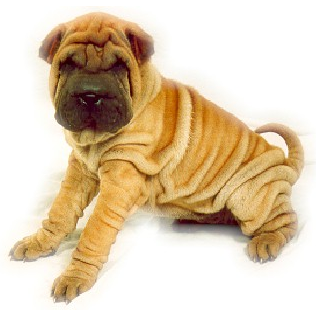
Hereditary periodic fever syndromes in human beings have been found to have a link with genetic mutation in the Shar-Pei dogs that is responsible for sagging or wrinkled skin in the breed!

The news on "Wrinkles in Shar Pei Dogs Clarifies the Reason to Human Fever Syndromes" has created a sensational buzz across the media... not only around the world wide web, but also across the entire media stream, including medical journals, videos, news releases and so on...

Human Fever Syndromes are characterized by repeated episodes of fever, accompanied with inflammation. Until the discovery of the root to the cause was made by a group of scientists, the pathogenic or autoimmune reasons were unknown. The team of researchers had burnt their midnight oil to unearth the cause of human fever syndrome. Studies have shown that it has been the same gene mutation that causes wrinkled skin in Shar Pei Dogs, is also the cause of inflammatory disease in human beings - human fever syndrome!

The gene mutation which brings excessively thick wrinkles in the skin of Shar-Pei dogs - sometimes called "wrinkle dogs" is also linked to a periodic fever disorder in human beings. A team of well versed US researchers discovered that the gene mutation that have been playing role in exhibiting wrinkles in Shar Pei could also have its implications on Human Fever Syndromes.

Owners and enthusiasts of Shar Pei dogs are well aware of the fact that this beautiful dog breed suffers from periodic fever disorder, although this problem have been brought under control through selective breeding. This problem is obviously one of the major reasons that have been diminishing the popularity of the breed. Scientists have been working hard to research on the inherited auto-inflammatory periodic fever syndromes in human beings, and finally found a resemblance to the periodic fever disorder in Shar Pei.

The heavily wrinkled skin of Shar pei is the consequence of excessive hyaluronan. hyaluronan is actually an anionic, nonsulfated glycosaminoglycan that is heavily distributed all through the connective, epithelial as well as neural tissues. In Shar Pei dogs, the over-activation of a gene called hyaluronan synthase 2 (HAS2) is the basic cause of heavy wrinkles on skin. Alongside, the over-activation of hyaluronan synthase 2 (HAS2) gene is also the root to periodic fever disorder in Shar Pei... documented by the scientists at the Broad Institute in Cambridge, Mass., and Uppsala University in Sweden. scientists have also mentioned that this finding, which was published in the March 17 online edition of the journal PLoS Genetics, will help the doctors and researchers improve their understanding of human inflammatory diseases.

According to the senior author Kerstin Lindblad-Toh, "the finding that hyaluronan is a major trigger of fever opens a new research field in canine and human inflammatory disease." Researchers have determined that in 60% of cases the genetic cause for periodic fever syndromes in human beings remain un-noticed.


Funding: This project had been supported and funded by the Swedish Research Council; FORMAS; the Swedish Research Council for Environment, Agricultural Sciences, and Spatial Planning; the Swedish Foundation for Strategic Research; in part by the Intramural Research Program of the National Institute of Arthritis and Musculoskeletal and Skin Diseases and the National Human Genome Research Institute of the National Institutes of Health; the Chinese Shar-Pei Charitable Trust and the European Commission (FP7-LUPA, GA-201370).

The fund providers had no role in structuring the design of study, collecting data and analyzing the information. The funders also had no roles in formulating decision to publish or preparing the manuscript.

Competing interests: The authors KL-T (who have been rewarded with EURYI award from the European Science Foundation), MO, and LT have filed a patent for development of a genetic test.

Read more...
Buzz this

Friday, June 12, 2009

Canine Cancer: FDA Approves The First Drug to Treat Cancer in Dogs

Pfizer's Palladia - The first canine cancer drug ever!

Here’s another good news for dog lovers and their dogs! It wasn’t until June 3, 2009 that the dog world people had been struck with such a great surprise. The Food and Drug Administration of America announced the approval of the first canine cancer medicine ever on Friday, June 3, 2009. ‘Palladia’ (toceranib phosphate), the first cancer treating drug for dogs created a buzz across the globe – especially revolutionized the veterinary world. Good news is that the now the dog owners got something to fight cancer in their dogs, but bad news is that it cannot treat all types of cancers in dogs.
canine cancer, cancer in dogs, cancers in dogs‘Palladia’, manufactured by Pfizer Animal Health Inc., New York City, can treat only the cutaneous mast cell tumors (MCT), which is a type of cancerous tumor, which is commonly found in about 1 out of 5 canine cutaneous tumors. ‘Palladia’ has been approved to treat the cutaneous mast cell tumors with or without regional lymph nodes involvement. Al the cancer drugs that have been in use for the veterinary purpose so far were all developed to be used for humans and not for animals. Until Palladia surged into the market canine cancer were treated with steroids and antihistamines and various oncology drugs for human. As allowed by the Animal Medicinal Drug Use Clarification Act of 1994, the cancer treatments meant for the veterinary purpose are used in an “extra-level” manner. Bernadette Dunham, D.V.M., Ph.D., director of FDA's Center for Veterinary Medicine said: "This cancer drug approval for dogs is an important step forward for veterinary medicine. Prior to this approval, veterinarians had to rely on human oncology drugs, without knowledge of how safe or effective they would be for dogs. Today's approval offers dog owners, in consultation with their veterinarian, an option for treatment of their dog's cancer."


How Palladia Works?


Remember, the mast cells have a positive role to play for dogs. The mast cells help to protect dogs from allergies and inflammation. But if over-stimulated, they discharge certain chemicals, like heparin, histamine, prostaglandins and serotonin, which damage the dogs’ immunity system. Unfortunately, what causes the tumors to turn to be cancerous is still not discovered. Palladia (toceranib phosphate) is a tyrosine kinase inhibitor and works in two distinctive ways:

  • Its kills the tumors cells and makes the tumor disappear or stop growing further
  • It cut off the supply of blood to the tumor region and makes it disappear or stop growing.
In a clinical test, Palladia proved to be one of the most effective drugs by showing shrinkage in the tumor. A radical difference has been witnessed when compared with Placebo.
Palladia has brought a radical change in the veterinary science, but its not devoid of side effects. The most common and probable side effects associated with Palladia are lameness, diarrhea, decrease or loss of appetite, weight loss and sometimes blood in the stool.

Cancerous mast cell tumors are actually categorized into three grades according to severity....
  • Grade I MCT is least severe and limited to just a tumor itself with no risk.
  • Grade II MCT is when the tumor begins to metastasize, but it’s still considered treatable.
  • Grade III MCT is when the tumors becomes aggressive and spreads through the lymph glands to the other parts of the dogs’ body.
Palladia is actually meant for Grade II and III.

Read more...
Buzz this

Saturday, August 16, 2008

More About Booger's Cloning

Check out the magic moment that came in McKinney's life, when she found five little Boogers. Here's that amazing clip that shows how excited she was that day. She was so happy to get back Booger in her life once again. The sudden shriek of joy made her cry, saying: "Yes, I know you! You know me, too!", hugging the puppies. Truly... it might have been the most amazing moment in her life... rather the best treasured wealth of McKinney's life. So just switch on your speakers and play this clip... enjoy!


According to RNL Bio, Booger's cloning was the world's first successful commercial cloning of a dog, which revealed opportunities for the company to commence its worldwide services with Booger as the company's first successful clone.

Fact behind Booger's cloning

Booger was the most lovable member of McKinney's family. McKinney was especially attached to her male Pit Bull Terrier - Booger because he saved her life when she's attacked by another large dog, leaving her with her left hand and stomach severely injured and the her leg nerves damaged. Although the doctors reconstructed her hand but she had to spend a part of her recovery on wheelchair, that had been pulled by Booger when the battery ran out. Booger used to work hard for her the day long. He opened doors for her with his teeth, helped her take off her shoes and socks, even though he wasn't a trained dog.

Booger ended his journey on April 2006; he died of cancer. After Booger's demise McKinney contacted Lee Byeong-chun, a former colleague of Hwang Woo-suk. Earlier she had asked the 'U.S.-based Genetics Savings and Clone' to clone booger . The company later wound up in late 206 due to the lack of demand for clonning, although it succeeded in producing good numbers of cloned cats, but failed to produce any dog clones successfully.

The South Korean scientists brought Booger's frozen cells to SEOUL in March 2008 and nurtured them with immense care prior to launching the formal cloning process in late May. RNL Bio charges up to $150,000 for cloning a canine, but for McKinney, it's just one-third of that amount. She is the first customer of the company and helped with publicity. The company's charging only $50000 for Booger's clonning, said company head Ra Jeong-chan.

Read more...
Buzz this

Bernann McKinney's Booger is Back - World's First Commercial Dog Cloning

canine IQ, free dogs and puppies, dog days of summer, dog illnesses symptoms, dog pregnancy symptoms, dog illness symptoms, dog training, symptoms of sick dog, symptoms of dog worms, dog health symptoms, dog birthday cake recipe, symptoms of dog diseases, sick dog symptoms, dog cloning, dog health, dog diseases symptoms
Here's another miracle by SEOUL! This time SEOUL chanted a magic spell on Bernann McKinney an American women who lost 'Booger' her beloved Pit Bull Terrier on July 2008. This August 5th the Associated Press declared: "Booger is back"!

The clones of Booger, the child of Bernann McKinney were born on July after being cloned in cooperation with the enigmatic team of Seoul National University scientists, who created the world's first cloned dog in 2005. "It's a miracle!" McKinney shouted repeatedly when she saw the cloned Boogers for which she paid $50,000. How could a mom resist her emotion, if she finds her baby back again? Shriek of emotion could be seen on her face when she shouted joufully: "Yes, I know you! You know me, too!". McKinney was overjoyed while hugging the 5 cute little 'Boogers' that were lying with one of their two surrogate mothers - both being Korean mixed breed dogs.

This time Hwang Woo-suk wasn't in the scene! The team of Seoul National University scientists working for the RNL Bio had been headed by Dr. Lee Byeong-chun, who was a former colleague of Hwang Woo-suk. Lee Byeong-chun said that its cloning was the first successful commercial cloning of a canine, which is really a big achievement.

Bernann McKinney, who's a screenwriter and use to teach drama at U.S. universities, wants to take three of the cloned dogs to her home in California. She wants to donate the two other puppies to work as service dogs for the handicapped or elderly. She lives with five other dogs and three horses. Congratulations to McKinney for the new addition to her family.

Stay tuned... lot more about Booger's Cloning story's yet to come.

Read more...
Buzz this

Thursday, August 14, 2008

Dogs In The News -- World's First Cloned Dog


Hey folks... I am back again after a long span of time with something really interesting to talk about. You might wanna know where was I hibernating all these days. I was lost in my world of job. Days have been so hectic for me that I couldn't even get time for myself. Somebody - told me, "Hey, chase your target, you shouldn't have your personal life"!

Just yesterday one of my darlin' li'l sister colleagues asked me "why don't you update the blog? It's dying"! She's a new comer in blogging world with her new baby... cool one! She's nurturing it well, it's but not crawled as yet.

It's been a long span since I last posted about Mc Nab dog breed and I was having nothing swirling in my mind regarding what to talk about then. I suddenly remembered, I tried posting about something a couple of weeks back, but time did not permit me. I remembered 'I shouldn't have my personal life' :)

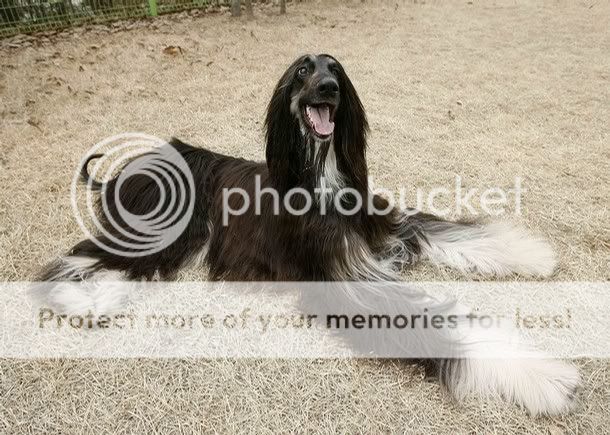
Here's something that I came across sometimes back! Have you heard of SNUPPY? Some of you have... I'm sure; I'm sure, many haven't. I wasn't aware of this fact too until I found news flashed on the BBC's official site. A group of South Korean researchers have been working on this since years. They have produced the world's first cloned dog. Earlier in 2005 these scientists announced that they succeeded deriving stem cells from a cloned human embryo and around the mid of the year (Snuppy was born on April 24, 2005) they created the world's first cloned dog - a male Afghan Hound. The Afghan was cloned in cooperation with the a team of scientists of Seoul National University, giving birth to a couple of cute little pooches. Although one of the puppies died soon after the birth, the other one (named SNUPPY) is doing well till date.

Why Snuppy? Why not something else?

Well, the scientists named the puppy in the honor of the organization - Seoul National University Puppy - SNUPPY. Check out how they created SNUPPY... click here. The lead researcher behind the creation was Hwang Woo-suk, who had been caught to be faking other researches, thereby breeding lot of doubts as to whether Snuppy was the real cloned dog. Later independent experiments have been carried out to prove that SNUPPY was a true clone and exactly representing his gorgeous genetic dad! SNUPPY is quite healthy these days and good news is that, he's joining a host of other cloned animals, some of which are the sheep - Dolly, the cat - CC and the rat - Ralph.

Scientists believe that dog clones would help understand some of the critical canine diseases and would help them discover the secrets of cure of these ailments. They hope dog clones may help cure some human diseases too. Let's hope for the best. Congratulations Dr. Hwang Woo-suk and all the best for your next leap!

Check out some cool pics of SNUPY - the world's first dog cloned from adult cells by somatic nuclear cell transfer.


How was Snuppy created?

The scientists transferred 1095 canine embryos in 123 bitches that included three pregnancies. One fetus was miscarried , while one clone died at the age of three week due to pneumonia. The scientist picked a female fawn Labrador Retriever to carry the third embryo to term. Dr. Hwang Woo-suk and his team announced their success of cloning the world's first canine in August 2005. SNUPPY was cloned from adult cells by somatic nuclear cell transfer.

Read more...
Buzz this

Last Month's Popular Posts

inf-lnk

  © This dog blog is maintained by Arindam Ghosh

Back to TOP  

ss_blog_claim=4d485fcfdf9a1742242353455bbf50d4 ss_blog_claim=4d485fcfdf9a1742242353455bbf50d4