Showing posts with label Rare Dog Breeds. Show all posts

Friday, August 3, 2012

Dogs' Crossing

Amongst the entire variety of dog species, hybrids and half-breeds (“metis”) comprise a separate group. The whole process of dogs’ breeding is a set of science and art, which has interested thousands of animal-lovers all over the world. Most of them raise two main types of dogs: hybrids (the result of two different breeds’ crossing) or metises (do not have any signs of specific breeds or even pure-bred ancestors). There is also the third group of wolfdogs, which, as one could guess, look like wild wolves after crossing. Most of these dogs are the result of German shepherds’ or Siberian Huskies’ pairing.

Most of the zoologists and dog handlers agree that new breeds possess pretty distinctive behavioral and psychological features, oriented on accomplishment of specific assignments. However, mutations are not excluded, and constant breeding of several generations is not recommended. In this context, it is appropriate to consider the main methods of dogs’ crossing.

Inbreeding is a crossing of close relatives (mother, father, daughter, brother, sister, etc.) In fact, this method requires detailed analysis of physical and mental shape of dogs, and even their ancestors. Amateur breeders are recommended to learn dogs’ history up to fourth generation at least. In particular, inbreeding result might reveal the defects of dogs’ nature of the oldest generations.

Linebreeding is much alike inbreeding, but the “actors” are dogs, which have a common relative in third or fourth generation.

Outcrossing (outbreeding) is a pairing of unrelated breeds. Animal-breeders use it to invest any specific characteristic of the other line, or to correct the deficiency, penetrated into the line in terms of physical or mental characteristics.

The specific trend of dog breeding emerged at the beginning of the 20th century, which focused on design of dog breeds. Regardless this method has nothing in common with design of general meaning, but getting a dog with peculiar characteristics. It has started when breeders crossed thoroughbred poodle with other dog species. Their main goal was to create hypoallergenic breed, which would gather the best features of other ones. There are several general issues, associated with designer dogs.

First of all, the name of their breeds is a set of a few words of the parents’ breeds. For example, Pomapoo is a mix of Pomeranian and Poodle, Yorkipoo - Yorkie and Poodle, Foxy Russell - Jack Russell Terrier and Toy Fox Terrier, German Australian Shepherd – German and Australian Shepherd, Golden Shepherd - Golden Retriever and German Shepherd, etc. The tradition of such names roots back to 1960s, when Dorgi dog was crossed (a mix of Dachshund and Corgi).

Secondly, designer dogs are usually bred as decorative companion dogs. In addition, the main purpose of their breeding is a decrease of genetic mutations and health problems, much observed among purebred species.

Thirdly, registry of a new dog breed is quite a long process. If a breeder got a new designer dog it won’t be registered despite the whole blood of the parents. However, if several generations was created accompanied by necessary documentation, the dogs’ club might be organized, which is a necessary condition for new breed registry.

Read more...
Buzz this

Sunday, April 3, 2011

Volpino Italiano – The Glory Of Italy

The Volpino Italiano is one of the most rare breeds of dogs in the world. This breed is so similar to the white Spitz that the general flock usually makes mistake and gets confused when they come to know that this is a distinctive breed altogether and has got no connection with the Spitz that are commonly found all around.

This Spitz-type breed actually descends from Italy and has always been admired by the Italian royalties for centuries. But during the present era, the breed of Volpino Italiano is on the verge of extinction. Only a meager number of 50 to 60 originally well-bred volpinos exist in America. This fabulous breed of dog is known by many names such as “Florentine Spitz”, “Italian Volpino”, “Italian Spitz” and “Cane de Quirinale”.

History

Delving deep into the issue of the breed of volpino italiano, the history spans back to a date about 4000 to 5000 BC. The anthropologists said that the specimen that has been preserved in the European peats bogs is as old as 4000 BC. Fossil of the dogs exactly similar to the volpino italiano is almost 5000 years old. Spanning back to about 400 BC, the evidences of the existence of the Volpino Italiano has been found in Greece.

The breed of the volpino italiano has a strong resemblance with what we called the Pomeranians, but as a matter of fact this is totally a different breed and the history of the breed has got no link with that of the Pomeranians. The Volpino Italiano is basically much older than the Pomeranians and naturally has got a distinctive background.

According the canine experts and the researchers, the Volpino Italiano is one of the descendants of the European Spitz of which the skeleton fossils have been unearthed around the foundation piles of the lake dwellings. The European spitz had been in existence in the central Europe since the Bronze Age. This is why the volpinos are very like the German Spitz, which are not the ancestors of the breed but has a relation between them. Breed in Italy since the time immemorial, the volpino italianos had been the symbol of the place. In Italy the volpinos had always been highly appreciated and admired due to its innate power of vigilance and unswerving guarding instincts. The famous artiste Michelangelo of the 18th century had a well-bred volpino, which used to be the most loyal companion of his enigmatic master.

In the titalian dialect “lupo” is a word that is used to mean wolf. “Keeshond” is Italian dialect is termed to be “Volpino” and “Lupino”. Hence, this indicates that the word “Volpino” might be an old fashioned word that has been used to mean the “wolf Spitz” or “wolf dogs” or “small fox”.

The volpino italiano was the dogs of the elite class of the ancient Italian society. The brave and cute little dogs were so smart that they easily found their way into the lordly palaces of the ancient Italy. But for no explainable reasons the population of these cute members of the canine family suddenly and steadily went on the constant wane until it came to the verge of extinction. In America the volpinos had to come an end because of the unplanned breed and crossing them with the Eskimo dogs and Pomeranians. They continued this act until there were no pure breed Volpinos left.

In year 1965, the last five dogs were registered in the breed book and until the year 1984, the breed remained out of appearance. It was in the year 1984, when the ENCI had taken initiatives to launch a serious recovery project for the Volpino Italiano dogs.

General Appearance
The Volpino Italiano is a spitz-like breed and is very much like the German Spitz in look, although they have the distinctive ancestral background. With the maximum height between 11 to 12 inches at the wither these dogs stands exactly like the spitz and the Pomeranians. The colors of the Italian Volpinos are either unicolor – solid white or red or black, although the red and the black Volpinos are seldom found. The Volpinos have got a glorious and glassy coat that tends to be long and straight. The overall compact structure, with the long stand-off coat gives the cute look.

The pyramid shaped head, the round eyes denoting vigilance and vivaciousness, the short erect triangular shaped ears and the neck smartly carried upright gives a wondrous expression of intelligence blended with unparalleled beauty and unimaginative alertness.

Health Issue
The well-bred and properly maintained Volpino Italiano are usually blessed with good health and sound immune system. As a matter of fact the Volpinos have always been able to get accustomed with the constant changes in the environmental conditions of the world and this is the major reason that the breed is the oldest breed and is still in existence. Keeping the ears and the teeth clean is must as in the case of any other breed in the world. The volpinos are really one of the most sturdy breeds.

Nature

Like all the other small breed the Volpinos are quite playful by nature. They are highly energetic and love to run outdoor. They are very fast and can run at a tremendously high pace. They are wondrous guard dogs and have got the tremendous power of vigilance and normally they are quite friendly. Socializing from puppy stage is what is essentially necessary in order to restore and maintain their friendly temperament.

Official Recognition

The Federation of Cynologique Internationale (FCI) has placed the breed in the Group 5, Section 4 # 195. Very recently in the year 2006, July 1, the United Kennel Club (UKC) has recognized the volpino italiano as a separate breed with the standard similar to that of the Federation of Cynologique Internationale (FCI). In the same year during the summer the Foundation Stock Service (FSS) Program of the American Kennel Club (AKC) has declined the registration of the volpinos as these dogs are very much similar to the American Eskimo Dogs.

Links for German Shepherds enthusiasts

Read more...
Buzz this

Friday, March 19, 2010

Kooikerhondjes - Kooiker Dog Breed Information

Kooiker Dog, KooikerhondjesThe Kooikerhondje, also called Kooiker Hound, is a small breed of dog of spaniel type. With Dutch Ancestary, Kooikerhondje, or Kooiker Hound was actually used as a working dog – especially in tolling and game hunting. Being developed in the Netherlands around the sixteenth century, Kooiker hounds became one of the world’s most popular dog breeds during the 17th and 18th century. The evidence of it massive popularity could be found in many paintings of Jan Vermeer, Jan Steen and Rembrandt. The popularity of this breed started diminishing globally around the beginning of 19th century with the rise in popularity of other working dog breeds. Kooiker Hounds almost became extinct after World War II. Baroness van Hardenbroek ranging Ammerstol rescued and prevented the breed from total extinction. Currently Kooiker Hound is a relatively uncommon breed, although fortunately it is gaining its popularity in the United States and Canada.

Origin of Kooikerhondje:

With its roots of origin at Netherlands, Kooikerhondje was developed to work as tolling dogs. These breed were used to work with their masters to lure and drive ducks into koois (canal like cages). The breed has been named after the work they used to perform, i.e. driving ducks into the koois. Many canine researchers and historians believe that Kooiker dogs may have possibly played a most vital role in the developmental process of another not-so-common dog breed called “Nova Scotia Duck-tolling Retriever”.
Kooiker Dog, Kooikerhondjes
Although not much is know about Kooikerhondje, still it is believed that the breed descends from English Red Decoy Dog, which is now extinct. These dogs are much different from the other hounds used for hunting that would go after bear and wolves or other wild animals. Known for using its white bushy tail to distract the ducks to run into the koois theses dogs were used to drive ducks into a fenced area, and NOT to hunt and kill them. Even today they are still used for the purpose, for which they were developed centuries ago.

Nature and Behavior of Kooikerhondje:

Kooikerhondjes are very active dogs, without being overly excited, which is a disqualification as per the breed standard. By nature the Kooiker dogs are highly friendly to everyone; more with the older children, but wary with strangers. Being intelligent, Kooikerhondjes are easily trainable. They are always attentive and alert their masters to any anything unusual situations. This unique nature of the breed makes them a real good watch dog. Devoted and affectionate with their family, they are very good companions to all family members. They are very cheerful and good tempered, yet still noisy at times ad often are very territorial. Although very good watch dog they are not as good for Guard purpose. Other qualities are:

Intelligence: Moderately high
Learning Rate: High
Trainability: Easy
Obedience: Medium.
Problem Solving Ability: Low
Activeness: High
Desired Living Environment: Rural or suburban region is preferred
Social Behavior: They get on well with dogs and cats provided they are properly socialized at the early stage.
Other Names: Kooiker Hound, Small Dutch Waterfowl Dog, Dutch Decoy Dog, Kooiker Dog

Kooiker Dog, KooikerhondjesGeneral Appearance of Kooiker dogs:

Kooikerhondje is a small spaniel like dog breed with brightly colored in white and red. The slightly waved medium-length coat is predominantly white with red or orange patches. The moderately domed and broad skull is of length almost equal to the muzzle, which is not too deep. The almond shaped eyes are dark brown, nose is black and the cheeks are pigmented red, which are desirable. The ears are medium sized, long and feathered with back tips and hang close to the cheeks. The black tips of the ears are called “earrings”. The head is held uplifted with even tempered and friendly expression in the eyes, with no sign of attack and aggression. The Kooiker dogs have square body with strong back, without having any overly angulated points. The deep chest has sufficient spring of ribs. Well feathered tail has a beautiful white plume and carried level with the back. The well feathered coat with close set straight hair and a well developed undercoat makes it water proof.

Health Issues with Kooikerhondje:
This breed is mostly prone to certain health issues, the worth mentioning of which are hereditary nectrotizing myelopathy (a degenerative disease similar to Multiple sclerosis), von Willebrand's disease, epilepsy, patellar luxation, cataracts.

Kooikerhondje Breed Recognitions and Registries:

The Kooikerhondje had been officially recognized by the Dutch Kennel Club in 1971
2006 AKC Ranking: Not Ranked

Registries:

• DKC - Dutch Kennel Club
• ACR -American Canine Registry
• APRI -American Pet Registry Inc.
• ARBA -American Rare Breed Association
• FCI -Fédération Cynologique Internationale
• KCGB -Kennel Club of Great Britain
• KCUSA -Kennel Club USA NKC -National Kennel Club
• UKC -United Kennel Club

Check out some other rare dog breeds and some dog diseases that you might find very important to know about. Find information about many other dog breeds.

Read more...
Buzz this

Friday, January 16, 2009

Rare Dog Breed Information: Campeiro Bulldog - Brazilian Bulldog Breed

Rare Dog Breed Information, Campeiro Bulldog, Brazilian Bulldog Breed, Brasilian Bulldog Breed, ancient dog breed, rare dog breed, Brazilian Bulldogs, Brazilian Bulldog pictures, dog pictures, dog pics, dog photos, dog breed pictures of dogs, dog lovers sites, dog blogs, rare dog breed, dog pictures, dog pics, dog photos, dog breed pictures of dogs, dog lovers sites, dog blogsOne of the most rare dog breeds in the world, the Buldogue Campeiro i.e. Campeiro Bulldog is commonly called Brazilian Bulldog or Brasilian Bulldog and even sometimes called Rural Bulldog has been reported to have come into the scene round the 16th Century. Brazilian Bulldog was once common in Brazil and was made to use especially by the shepherds to capture the wild or lost cattle. Very less is known about Campeiro Bulldog or Brazilian Bulldog breed, but documentations about the breed's history and its origin have stated that this is an extremely rustic working breed of dog. Brazilian Bulldog (Brasilian Bulldog or Campeiro Bulldog) descends from the English Bulldogs and introduced by the European immigrants in 16th crentury to the Santa Catarina and Rio Grande del Sur in Brazil. One amongst the very ancient dog breeds, the Brazilian Bulldogs was bred to create a perfect rural working dog breed for the Brazilian rustic society. Though the name was actually derived from the name English Bulldog, but as an influence of the portugese language, some words like "Buldogue Pampeano", "Bordoga", "Buldogue Campeiro", "Burdogue" etc. have been found to have come up. The Brazilian Bulldog that we see today hails from the Egnlish Bulldogs that used to help the slaughterhouses owners for holding and killiing furious bulls whenever required.

Rare Dog Breed Information, Campeiro Bulldog, Brazilian Bulldog Breed, Brasilian Bulldog Breed, ancient dog breed, rare dog breed, Brazilian Bulldogs, Brazilian Bulldog pictures, dog pictures, dog pics, dog photos, dog breed pictures of dogs, dog lovers sites, dog blogs, rare dog breed, dog pictures, dog pics, dog photos, dog breed pictures of dogs, dog lovers sites, dog blogsAppearance:

At the first sight, the Brazilian Bulldog gives an impression of incredible power with typically strong constitution. This is a breed with terrific stamina and strength, but at the same time he is agile enough too. One of the most perfect canine breed for the Brazilian rustic society, this Rural Bulldog has been reported not to suffer from too many diseases, except for certain commonly know health disorders that any breed around the world may be afflicted to.

The short, smooth coat, are set tightly flat and not fluffy and shows medium texture. The distinct muscle tone, strong and muscular neck, deep and broad chest with well round rib cage, wide head, strong and wide snout and powerful jaw, give an impression of great strength and courage and add weight to his boastful gestures. The forequarter is slightly sloping and the front legs are turned little outwards. Muzzle is broad, but a bit short (around1/3 of the length of skull), his almond eyes, small to medium ears that are set high, rose and wide, semi-pendulous lips with well-rounded cheeks add a bit of essence to his fierce facial appearance. The moderately heavy boned not-so-long legs and are sturdy enough work hard in the rustic belts of Brazil. Found in a wide variety of colors, ranging from solid white to brindle and even the combination of white and tan, almost all colors are allowed by the dog kennel of choice. Rare Dog Breed Information, Campeiro Bulldog, Brazilian Bulldog Breed, Brasilian Bulldog Breed, ancient dog breed, rare dog breed, Brazilian Bulldogs, Brazilian Bulldog pictures, dog pictures, dog pics, dog photos, dog breed pictures of dogs, dog lovers sites, dog blogs, rare dog breed, dog pictures, dog pics, dog photos, dog breed pictures of dogs, dog lovers sites, dog blogsOne noticable point is that there has been no report of solid black Brazilian Bulldog. Brasilian Bulldogs are born with croocked tail, which is a bit shorter - that doesn't reach beyond hock.

Height at wither: 18.9 and 22.8 inches
Weight: 35 and 45 kg (77.2 and 99.2 lb)

Ideal as a guard dog in the modern society, the Campeiro Bulldog displays a real marvellous look..

Behavior and Temperament:

Despite his aggressive look and immense strength this rural bod breed - the Brazilian Bulldog (Brasilian Bulldog) is docile enough to his owners and pack members. May be a bit too aggressive towards the stranger and intruders the Rural Bulldog is calm and display a cool behavior, if not challenged. He is perfect as a company dog, especially for hostile field environment, but as apartment dogs, Brazilian Bulldogs have proved to be a good companion too! His submissive nature is a real boon for his owner, who won't have too much of temperament problems if he knows who the boss is and his pack members. His is loyal to his owner and displays calm demeanor with accentuated spirit of an warrior. Rare Dog Breed Information, Campeiro Bulldog, Brazilian Bulldog Breed, Brasilian Bulldog Breed, ancient dog breed, rare dog breed, Brazilian Bulldogs, Brazilian Bulldog pictures, dog pictures, dog pics, dog photos, dog breed pictures of dogs, dog lovers sites, dog blogs, rare dog breed, dog pictures, dog pics, dog photos, dog breed pictures of dogs, dog lovers sites, dog blogsBrazilian Bulldogs are a bit too obstinate to cross any hurdle, while at the same time controlled enough to show high degree of obedience at the commands of his master.

Recognition:

Brazilian Bulldog has been recognized by Brazilian Canine Organization (CBKC). Not yet recognized by FCI.

Pictures of dogs taken from net

Read more...
Buzz this

Monday, January 12, 2009

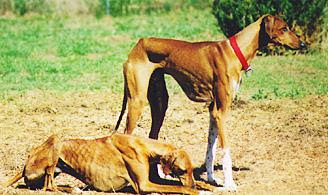
Afrikan Azawakh Dog Breed Information - Ancient Dog Breed

afrikan azawakh dog breed, ancient dog breed, azawakh dogs, azawakhs, afrikan azawakhs, african azawakh dogs, rare dog breeds, dog breed information about dog breed, dog breeds info, welcome dog lovers, information about dogs, african azawakh dogs, african azawakh dogs, african azawakh dog breed, african azawakh dog breed, african azawakh dogsAfrikan Azawakh Dog is another most ancient and rare dog breed that has been in existence for centuries. Azawakh dog is a breed, built for speed! The slender, bony structure of an Azawakh dog are the major attributes that have helped him to be enrolled in the fastest dog breeds of the world. Azawakh Dog is a sighthound dog breed, originated Africa. Documentations of the recent studies on this breed have shown that the Azawakh Dogs have hailed from the pariah dogs of sub-Saharan Africa. Also known by other names like Idi, Tuareg Sloughi, Hanshee, Oska and Wulo, the Azawakh Dog breed is closely related to the Sloughi of the Maghreb. Azawakh (pronounced ‘Oz-a-wok’), which means the ‘land of the north’, gets its name from Azawakh Valley in Sahel region of the Sahara desert.

Origin of Afrikan Azawakh Dog:

Since the origin of the Azawakh Dog is lost in time, not much is exactly known about the breed origin, but evidences have shown that he has been serving the Tuareg tribes and other nomads of the Central African countries of Mali, Niger, and Burkina Faso for millenia! People have been using Azawakh Dogs as hunter, guard, and as companion dog. With passage of time Azawakh got an opportunity to enter people's drawing room as a symbol of status. afrikan azawakh dog breed, ancient dog breed, azawakh dogs, azawakhs, afrikan azawakhs, african azawakh dogs, rare dog breeds, dog breed information about dog breed, dog breeds info, welcome dog lovers, information about dogs, african azawakh dogs, african azawakh dogs, african azawakh dog breed, african azawakh dog breed, african azawakh dogsEven these days, often the Aazawakh can be seen lying on the straw roofs of their Mali owners. As the night predators like hayenas approach, the Azawakhs would the first ones to ponce on the intruders in group and kill them. One think to be said for sure that the Azawakh Dogs originated in Sahel region of Africa, and have a relation with the sight hounds. studies have show that Azawakh dogs have a morphological structure that is very much similar to the Middle Eastern and of the North African sighthounds. Besides, researchers have studied the mitochondrial DNA evidence to conclude that Azawakh dog is only very distant member to other sight hounds! Quite interestingly, this ancient dog have a rare Glucose Isomerase Allele (GPI) that matches with that of certain entirely different mammals like jackals, foxes, Italian wolves and a few other quite different types of rare members of canidae family, from Japanese origin.

Appearance:

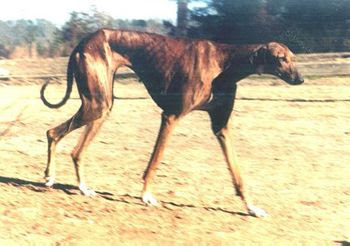
Recommended as a pet, working dog, or a companion dog, the Afrikan Azawakh dog has his own distinctly unique look that is intensely dry and bony, yet elegant enough to display an aesthetically sporty appearance. afrikan azawakh dog breed, ancient dog breed, azawakh dogs, azawakhs, afrikan azawakhs, african azawakh dogs, rare dog breeds, dog breed information about dog breed, dog breeds info, welcome dog lovers, information about dogs, african azawakh dogs, african azawakh dogs, african azawakh dog breed, african azawakh dog breed, african azawakh dogsThe typical structural qualities - strikingly slender and elegant physique with geometric simplicity of the Azawakh dog, have allowed him to serve three distinct purposes: as a protective companion, as a swift and very powerful coursing dog, and as a status symbol for the elites of the society. The dry muscle tone are visible clearly under the taut skin, has given him an exceptionally graceful look, whether he is stacked or on a stylized move. Unlike the Whippet and Greyhound the "dry" muscles of Azawakh Dog lie quite flat with the body. The short, smooth and silky coat are set close tight, giving it a more sporty appearance. The coat is almost absent in the belly region. In a well-bred Azawakh, the large, dark or amber 'almond eyes' are set in the right proportion with the slightly long and slender head to give an intelligent facial gesture. Ears are set high, fine, drooping, triangular with rounded tip. Muzzle is almost half the head's length. Nose has open nostrils, with black or brown pigments. The long, thin, and tapered tail is set low and has white brush at tip. All these merge together to give the dog a unique look. The Azawakh is the only dog breed that moves with a distinctly feline poses, characterized by "bouncy gallop". The natural gait of a well-bred Azawakh is collected and elastic, with a cool demeanor, giving out brief feral glances hither and thither, without being distracted out of the motive! The long and slender legs allow the dog to run at a speed as high as 40 miles per hour. The relatively broader feet enables him to walk miles on the Saharan sand at easy, like some of the other dessert mammals like camels.

afrikan azawakh dog breed, ancient dog breed, azawakh dogs, azawakhs, afrikan azawakhs, african azawakh dogs, rare dog breeds, dog breed information about dog breed, dog breeds info, welcome dog lovers, information about dogs, african azawakh dogs, african azawakh dogs, african azawakh dog breed, african azawakh dog breed, african azawakh dogsThe breed standard calls for the Azawakh Dog breed, ranges between 33 to 55 pounds for body weight and 25 to 29 inches for the height at wither.
Although in his native land the Azawakh Dog is found in a wide range of color combinations and varied degrees of refinements, the FCI breed standard calls for the allowance of the pigments, ranging from clear sand color to dark fawn or brown, red and brindle (with or without dark mask), with white bib, tail tip, and white on all feet (which can be tips of toes and extended to to high stockings). At this moment, the white stockings that go above the elbow joint and the white collar or half collar (Irish mark) are treated disqualification in France.

Behavior of Azawakh:

Contrast to the geometric simplicity in the physical structure, the mental configuration of an Azawakh Dog is really quote complex, making the dog a bit hard to understand! Despite being intelligent, the Azawakh Dog exhibits certain typically primitive ambiguous instincts clearly distinguished beneath his decent behavior.Well, in this regard, I have heard some people comparing him as a "sugar coated tablet".... that's perfectly incorrect! Many the hound dogs show similar characteristics of being lupus rather than being a bit too familiar to all. Most of the dog breed tend to be too close to human, while others like to stay aloof and away from the human. Azawakh dog breed prefer to be between the two broad canine categories, with a bit inclined to the later! He is a perfect guard dog, with high degree of territoriality. He tends to bark ferociously at strangers and may even show a high “savageness” to the intruders according to the FCI Breed Standard. He requires to be highly socialized properly socialized and unless it done perfectly you can't expect him to approach a stranger with friendly overtures. To be very candid, Azawakhs are not truly a domestic pet - especially for novice pet owners .

Afrikan Azawakh Breed Recognition:

Until January 1, 1993 the Azawakh Dog breed wasn't recognized by the Azawakh was recognized by the United Kennel Club. The AKC Foundation Stock Service (FSS) is an optional recording service for the purebred Afrikan Azawakh Dogs that are not yet eligible for AKC registration. Other international FCI, UKC - NKC, CKC, APRI, ACR.
afrikan azawakh dog breed, ancient dog breed, azawakh dogs, azawakhs, afrikan azawakhs, african azawakh dogs, rare dog breeds, dog breed information about dog breed, dog breeds info, welcome dog lovers, information about dogs, african azawakh dogs, african azawakh dogs, african azawakh dog breed, african azawakh dog breed, african azawakh dogs

  • FCI - Group 10 Section 3 #307
  • AKC - Hound (FSS)
  • KC (UK) - Hound
  • UKC - Sighthounds and Pariah Dogs

Read more...
Buzz this

Saturday, January 10, 2009

Central Asian Ovcharka Dog - A Rare Dog Breed

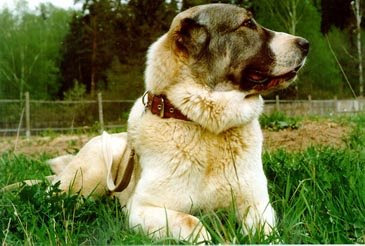
Central Asian Ovcharka dog breeds, rare dog breeds, dog breed information, dog lovers, Central Asian Ovcharka dog breed, rare dog breed information, Central Asian Ovcharka dogHere's another rare dog breed.... Central Asian Ovcharka. Although one amongst the very rare dog breeds, the large, muscular, Mastiff type Central Asian Ovcharka has marked its in the heart of many dog lovers across the world. Quite a lot impetuous, fearless and of steadfast valor, the Central Asian Ovcharka have always been amongst the most loved dog breeds in many countries. The heavy bones, large chests and wide backs of the Central Asian Ovcharka gives the dog an impression of tremendous innate strength.

Pronounced as "uhf-'chAr-ka", the word "ovcharka", which is also spelled as "ovtcharka" and "owcharka", is a Russian word that is used to denote something like a "sheepdog", "livestock guardian dog" or "shepherd's dog". Not specific to this particular breed of dog, the word "ovcharka", in Russia, is often used as as suffix to names of many working dog breeds, for instance, Belgian Sheepdog as bel'giyskaya ovcharka, German Shepherd Dog as nemetskaya ovcharka etc.

Native to Russia, "Ovcharkas" are actually four different categories: Central Asian Ovcharka (other names: Sredneaziatskaya Ovcharka, Central Asiatic Ovcharka, Central Asia Shepherd Dog, Middle Asian Ovcharka, Mid-Asiatic Sheepdog) Caucasian Ovcharka (other names: Kavkazskaya Ovcharka, Caucasian Shepherd/Sheepdog) South Russian Ovcharka (other names: Youzhnorusskaya Ovcharka or South Russian Sheepdog)East European Ovcharka.

Origin of Central Asian Ovcharka:

Not much could be traced about the Evolution and origin of the Central Asian Ovcharka, but researchers have concluded that CAS dog breed have been in existence for around 4000 years now. Central Asian Ovcharkas and the Caucasian Ovcharkas share a common origin - the Asiatic type of dogs that hailed from the Tibetan Mastiff. Both these breeds were bred by the shepherds, who made them work as the protection dog for their livestock against the predators, like leopards and wolves. Documentations about the Central Asian Ovcharkas states that the origin of these dogs is in Central Asia -- Central Asian Republics of the Former USSR.

General Appearance - Central Asian Ovcharka:

Preferred and praised by the shepherds for centuries for their innate stamina and ability to kill wolves, Central Asian Ovcharkas are often called " Volkodav" - a Russian word for "The Wolf Crusher"!

Central Asian Ovcharka is a giant dog with robust built, giving an impression of great strength. The short or moderately long hair with heavy undercoat give the dog a very different look from many of the other giant dog breeds that are commonly seen. Although ears used to be cropped and tail docked sometimes in the past, but due to the legal banning of cosmetic surgeries in many countries, these are not done these days. Taller at wither and slightly longer than the average dog breeds, the Central Asian Ovcharkas looks quite smart and powerful. Moderately large head without pronounced skull and stop, slightly low set short muscular neck with prominent dewlap, broad rump, fairly broad structure with strong muscular tone are the major beauty enhancing factors of the breed. Due to the well developed floating ribs the rib cages seems to be a bit longer, giving the dog a bit longer structure. The long straight heavy boned legs, with moderately defined angulation are stronger than most of the other dog breeds. Typical motion trait of Central Asian Ovcharka is gallop, though they can trot at ease for hours without getting exhausted.

The dog comes in a varied combination of colors... the most common of which are black-and-white, brindle, and fawns ranging from whitish shade to dark reddish.

Heights at maturity as per standard:
Central Asian Ovcharka dog breeds, rare dog breeds, dog breed information, dog lovers, Central Asian Ovcharka dog breed, rare dog breed information, Central Asian Ovcharka dog
Males - 25 - 32 inches
Females - 23 - 27 inches

Weights at maturity as per standard:

Males - 121-176 lbs
Females - 88-143 lbs

Behavior of Central Asian Ovcharka:

Alike all Ovcharkas, the Central Asian Ovcharka has a well-balanced and even-temperament with a fair degree if intelligence and problem solving ability. Alike most of the guard and protection dogs they are quite suspicious of and aggressive toward the strangers, while independent enough with a strong-willed personality. Although apparently, he may seem to be a bit too phlegmatic to an intruder, but running away may be too late, once a stranger comes close to him. Unlike East European Ovcharkas, a Central Asian Ovcharka dog is naturally a stubborn breed, which makes him little difficult to train him for obedience. This is where his nature matches very much with Caucasian Ovcharka dogs. This calm and fearless flock guardian can make loving pet as they are are good with their family members.... not to forget the fact that they MUST be supervised with kids and socialized with children at vary early age.

Health Issues - CAS Dog:

Alike many of the large breed dogs, CAS dog is very much prone to hip and elbow displasia, although planned and selective breedings have mitigated the problem to a great extent. Although a deep chested dog breed, there hasn't been any evidence to conclude that this CAS dog breed is prone to bloat, as it is with many of the Mastiffs.

Recognitions:

Central Asian Ovcharkas have been recognized by FCI, UKC, NKC, ANKC, APRI, ACR and ARBA (American Rare Breed Association). The American Rare Breed Association allows the CAS dog owners to show their beloved CAS dogs in America. This rare dog breed has been placed under Working Group; used as flock and livestock guardians, Estates guards, and personal guardians.

Read more...
Buzz this

Last Month's Popular Posts

inf-lnk

  © This dog blog is maintained by Arindam Ghosh

Back to TOP  

ss_blog_claim=4d485fcfdf9a1742242353455bbf50d4 ss_blog_claim=4d485fcfdf9a1742242353455bbf50d4