Can Dogs Laugh? I am Just Curious About Dog Laughing...
Can Dogs Laugh?
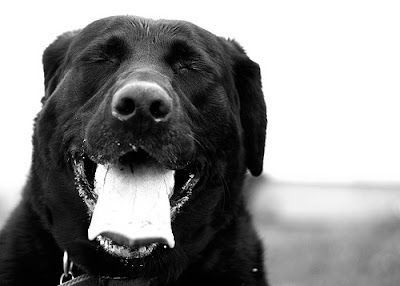
Dog laughing is no more just a nifty curiosity of the dog lovers... rather more expanded form of researches have been carried out all through the world to establish whether dogs can really laugh. Modern studies suggest that dogs' laughter, alike human, is a very strong form of their communication with their pack members -- other dogs/animals and with their beloved owners.
Stanley Coren, Ph.D., F.R.S.C., a Professor Emeritus in the Department of Psychology at the University of British Columbia has been making constant researches on dogs and their psychology.  According to professor Coren, "Animals make laugh-like sounds when they are tickled or playing... ". Modern canine behavioral studies defy the already established idea of psychologists and behavioral biologists that "laughter was a unique emotional expression found only in humans". The Nobel Laurette, ethnologist, Konrad Lorenz has chosen to differ from the already established idea of canine psychologists and behavioral biologists, and re-established that dogs can laugh. He says that it is during play that dogs actually appear to laugh.
"Man Meets Dog" is a famous book authored by Mr. Lorenz, who described this specific emotion in dogs in this way:"...an invitation to play always follows; here the slightly opened jaws which reveal the tongue, and the tilted angle of the mouth which stretches almost from ear to ear give a still stronger impression of laughing.  This ‘laughing' is most often seen in dogs playing with an adored master and which become so excited that they soon start panting". It is this "panting", which according to Lorenz is similar to human laughter.
Patricia Simonet, who is the Cognitive Ethologist and Animal Behaviorist said that she found a way to cool down the raucous barkers at her animal shelter. Simonet said she use to play a recording of dogs “laughing” – a prominent breathy exhalation through the mouth - which is generated when the dog pants in excitement. Simonet compares the sound with the "pig snorting". She found its similarity with the human “hah hah hah” without the “a.” This is dog laughing, according to the research scientist Patricia Simonet. While describing the laughter sound in dogs she said, "To an untrained human ear, it sounds much like a pant, 'hhuh, hhuh."
So what is the difference between a dog laughing and general panting?
To describe this difference between a dog panting and the laughter of a dog, Simonet describes what she had studied while analyzing the sound of playing dogs being recorded in parks with a parabolic microphone. What she defines as a laugh of dog is the exhalation sound that bursted into a broader range of frequencies than the sound made by a dog while panting in general. She also noticed that when she imitated the laugh panting sounds of dogs it appeared to cast a positive and enliven effect on the dogs that hear it. A shinning facial expression is exhibited by the dogs hearing it.


 The dog pictures in this post will give you an idea of dog emotions
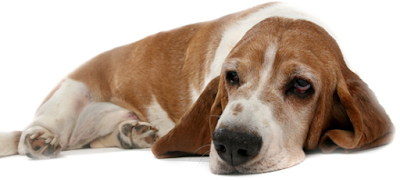 So how do I recognize my dogs emotions?
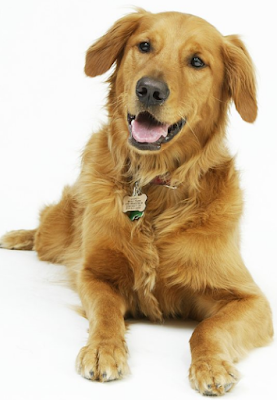 The facial expressions of both the dogs are different from the expressions they both show when they come across the strangers. I am sure you might also have noticed this!
 A happy dog will be anxious to see what trick is going to be made by his master. If you carefully notice his ears, eyes, head movement, tail position and movement, the way he’s carrying his head, the posture he is carrying himself with etc. you will get and idea of his emotional state. Not just one thing can give you a correct view, for example, tail wagging doesn’t always mean that he is in playing mood. A bed ridden dog will wag his tail seeing his owner; that doesn’t mean that he wants to go out to play, but it’s an indication that he is happy to see his loved one and wants his owner to stay by him during his bad time. Tail wagging indicates excitement, anticipation, playfulness, contentment/enjoyment, happy, self-confidence etc. Along side the tail wagging, I notice the tail position, facial expression, ear position and obviously the vocal communication to conclude exactly about my dogs’ emotional state.